All posts by Gordon Hunsucker
I Asked ChatGPT to Write 3 Marketing Job Inquiry Emails — Here’s What I Got

As a full-time freelancer, I’ve sent out hundreds of job inquiry emails.
As a full-time freelancer, I’ve sent out hundreds of job inquiry emails.
While I also reply to freelance role ads, I know first-hand that you can win some of the best projects by being proactive and running outreach. In fact, that’s how I started cooperating with some of the world’s most renowned brands.
Just because a company you’ve got your eyes on hasn’t advertised a role doesn’t necessarily mean they’re not open to bringing the right person on board. Your job, however, is to grab their attention and show why you’re a good fit for the organization.
![→ Download Now: The Beginner's Guide to Email Marketing [Free Ebook]](https://no-cache.hubspot.com/cta/default/53/53e8428a-29a5-4225-a6ea-bca8ef991c19.png)
Sound a bit scary to get in touch with a company that isn’t actively looking?
Well, you might change your mind if you look at the number of applications businesses receive the second they post an opening on LinkedIn – it’s in the hundreds. And that’s scary.
If you don’t know how to go about creating a job inquiry email, then keep reading — I’ll tell you all about it.
Table of Contents
- What is a job inquiry email?
- How to Write a Job Inquiry Email
- What ChatGPT Wrote Me
- Writing My Own Job Inquiry Email
What is a job inquiry email?
A job inquiry email is a message you send to a company you’d like to work for but doesn’t currently have any job openings for someone in your field.
The email acts as a letter of interest, where you introduce yourself, mention your qualifications, and briefly explain what makes you a good fit for the organization.
You also add a CV in the attachment so that the company can get a better idea of who you are.
How to Write a Job Inquiry Email
It’s time for some practice. Here are a few tips that I follow whenever I write a job inquiry email.
1. Research the company first.
I’m assuming that you usually send a job inquiry to a company that you like and admire, so you know a thing or two about them.
But that’s not enough. You need to do proper research, which goes beyond visiting their site and quickly scrolling through their social media profile.
Google the brand and search for any interesting articles that you could refer to in your email, like being recognized as the best place to work.
Alternatively, you can try to find out who is responsible for recruitment and do a little digging on the person you’ll be contacting. It will be easier for you to build a connection. A generic email will not get you far.
Kimberley Tyler-Smith, an executive at Resume Worded, says, “A generic email gets lost in the inbox. Showing you’ve researched the company, their challenges, and their recent campaigns, you instantly put yourself in the ‘intriguing’ pile.”
Tyler-Smith suggests that applicants dig into industry publications, social media, and news mentions. Find out the company’s current projects, challenges, or recent successes.
“Make it clear how your skills and experience directly address the company’s challenges or opportunities. Did you love their latest marketing push? Did you notice a gap they’re not filling? Tie your skills and experience directly to these. Then offer a solution or suggestion,” she says.
Since marketing is about showcasing the brand, a candidate’s email needs to demonstrate that they have properly researched the business.
They can do it by referencing the brand’s messaging, the digital outlets it utilizes, and mentioning its history within their email’s context, says Christy Pyrz, chief marketing officer at Paradigm Peptides.
“By focusing on candidates who have shown in their job inquiry email that they have taken the time to research the brand, recruiters will find a hire that is the right person for the marketing position,” says Pyrz.
2. Start with a strong opening.
Most professionals receive anywhere between 50 to 100 emails every day. That’s a lot, especially considering how little time most of us have in between deep-focus work and meetings to check our inboxes.
Your email’s subject line and preview text need to stand out to catch the hiring manager’s eye and drive them to open it. Email clients typically display 50-90 characters of the message in preview.
What should those first few words focus on? Connor Butterworth, the CEO and owner of Southwestern Rugs Depot, says that your email should forge a bond by tailoring your message to the company’s recent achievements or news.
“If I receive an email that references, for instance, a recent campaign of ours and explains how the candidate’s skills could enhance similar projects, it instantly sets them apart,” he says.
Andrea Hoymann, head of strategy at Brand chemistry, agrees and provides an example of the information she’s looking for.
“Tell me something very specific you’ve noticed about our marketing. If you liked a post on social media, tell me why and how it’s relevant to our target market. And if you’ve improvement suggestions, it’s even better!” she says.
Personalizing the opening and the remainder of the email tells the potential employer that you haven’t sent the same message randomly to hundreds of companies.
“It also shows your strategic thinking as a marketer and gives me a glimpse of the ideas and perspectives you could bring to the team,” adds Hoymann.
3. Treat every job inquiry email as a micro-pitch.
Since our inboxes get flooded with emails every day, if you want to make sure that yours doesn’t disappear in the ether, you should treat every job inquiry email as a micro-pitch.
Remember, you only have a few seconds to grab the hiring manager’s attention. So, what can you include in your email?
Mark McShane, HR and managing director of AED Training, says, “Start with an impactful opener that distills your professional essence and clearly shows how your skills meet company requirements.”
For example, McShane says, let’s say you’ve bolstered social media engagement by 50% through innovative campaigns in your past role. This metric will captivate an employer.
“It’s not simply about enumerating accomplishments; it involves illustrating the link between your talents and their potential to drive the company’s marketing goals,” McShane says.
4. Attach your CV.
Even though your email should include some of your accomplishments and qualifications that are relevant to the brand you’re applying to, don’t forget to also attach your CV.
It will give them a chance to learn more about you and ask additional questions if necessary.
Make sure your CV is properly labeled, so hiring managers can store it on file, even if they’re not looking for anyone at the moment.
5. Use formal language.
It’s best to use a formal tone of voice in your email. It doesn’t have to be cold or uptight; just don’t make it overly relaxed.
Since you’re not speaking to them as their employee or customer, it’s safer to keep it professional — especially considering that you’ve never spoken to them before.
Approach this email like you would have approached an interview, i.e., with a professional demeanor.
6. Show excitement and readiness to wait.
Your job inquiry message should only be a “cold email” by definition. Its content should convey a positive message and show you as a professional whose presence could also boost morale within the team.
One of the ways to grab the hiring manager’s interest is by demonstrating your long-term interest, according to Sarah Jameson, marketing director at Green Building Elements. To do this, you need to strike a balance between professional and enthusiastic.
“You can say something along the lines of ‘I’m currently looking for a new role, and [company name] is doing the exact kind of work I want to be part of. I’d love to apply for any positions in the company where I could be a good fit.’ These lines can help establish why you’re interested in this specific company,” she says.
They also prevent the hiring manager from writing you off if, at the time they receive your email, there are no relevant openings. Make it clear that you’re willing to wait for your opportunity to join the marketing team’s ranks.
7. Prove that you need the job, understand it, and have the capacity to do it well.
Joshua Uebergang, director at Shopify marketing agency Digital Darts, says that there are three criteria candidates need to meet if they want their job inquiry email to work. He uses a custom formula to assess applicants.
“You need to get it, want it, and have the capacity to do it. If you can demonstrate them in your outreach email to businesses, you will stand out from 99% of ‘normal’ applicants,” he says.
According to Uebergang, getting it means understanding the role, the systems, and how they work together. This, he says, cannot be faked, so you should study the business before reaching out.
Wanting it involves genuinely liking the job and waiting to do it responsibility for fair compensation.
Finally, the capacity to do it “means they have the mental, physical, and emotional capacity to do it well,” he says.
Uebergang says that he uses a Google template to score each individual’s outreach message — the higher the number of points, the higher the likelihood that the company and candidate would be a great fit.
What ChatGPT Wrote Me
I’ve decided to check how helpful ChatGPT3.5 is when it comes to writing job inquiry emails.
I used three prompts. Each time, I gave it more information to see how it would impact the output. Here is what I got.
Version 1
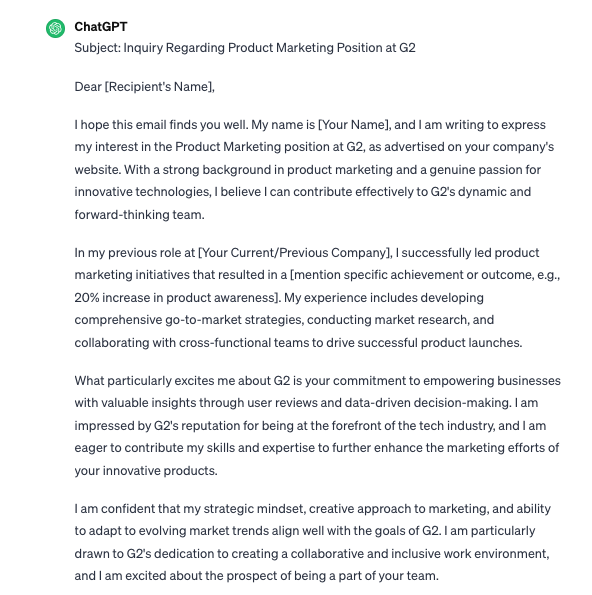
The prompt: “Write me a job inquiry email for a product marketing position at G2.”
What I Think
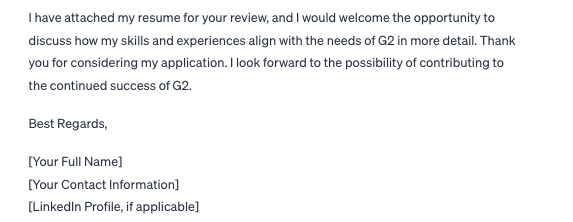
This first prompt was very generic; all I asked for was to write a job inquiry email. It suggests using a hiring manager’s first name, which is a good idea if we manage to find it, as it adds a more personal touch.
Even though the email includes an explanation of why a candidate is contacting them, it says it’s to express interest in the Product Marketing position as advertised on the company website, which clearly shows that ChatGPT doesn’t understand what a job inquiry email is. This is a grand mistake.
The email includes a list of relevant achievements, and there is even a suggestion to include a specific number, i.e., “a 20% increase in product awareness” — that’s spot on.
While ChatGPT explains why a candidate is excited about working for G2, the reason given is very generic. Stating “being at the forefront of the tech industry” could apply to many companies.
The email mentions that there is a CV attached and thanks the hiring manager for their time, which are both desired elements to be included in a job inquiry email.
Overall, I could treat the output as a first draft, but it would need quite a lot of work (especially research) before sending it to a hiring manager. To give ChatGPT some credit — the prompt was brief and provided minimal instructions, so I couldn’t expect a top-notch result.
Version 2
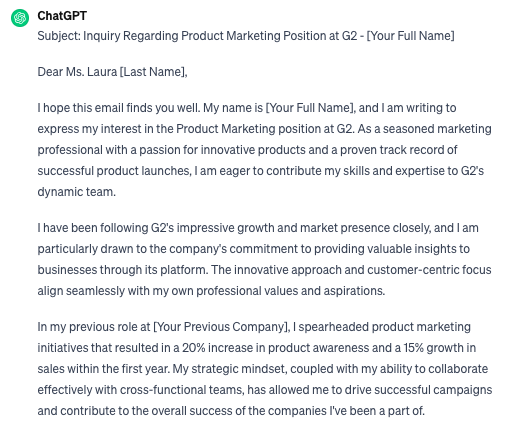
The prompt: “Write me a job inquiry email for a product marketing position at G2. The hiring manager’s name is Laura. Suggest an email title. Use a formal tone of voice, but show my excitement to explore roles at the company.”
What I Think
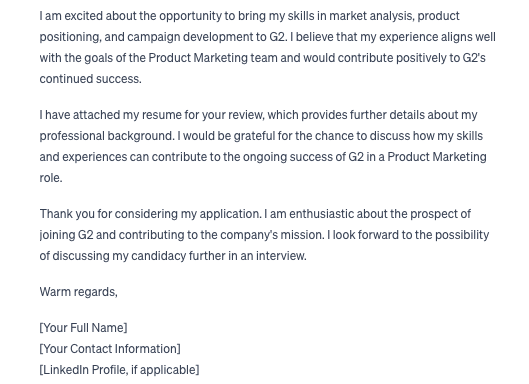
ChatGPT followed my instructions to use a formal tone of voice well but didn’t do a good job of displaying my enthusiasm.
There are better ways to show excitement than using general statements like “I am enthusiastic about the prospect of joining G2” and “I am excited about the opportunity to bring my skills” — especially when these aren’t followed by an explanation of why.
I would rather go for more emotional statements, like “I can’t picture a better place to grow as a product marketer than G2,” and then mention something brand-specific to back it up.
Once again, ChatGPT did a good job at suggesting that I use numbers to prove that I truly am, as it says, a “seasoned marketer.” Also, this suggestion is perfectly in line with the job inquiry email tips I shared in the previous section.
I would rework the opening statement a bit — while it no longer suggests that I saw an opening advertised on the company website, it says that I would like to express my interest in the Product Marketing position. This could puzzle the hiring manager since they know they aren’t actively seeking new team members.
Version 3
The prompt: “Write me a job inquiry email for a product marketing position at G2. The hiring manager’s name is Laura. Suggest an email title. Use a formal tone of voice, but show my excitement to explore roles at the company. Keep the email within 100 words.
Mention that I have five years of experience in product marketing in B2B and that I would like to work at G2 as it would be an amazing opportunity to learn about how SaaS companies build their product–market fit and strategize around standing out on the market.
These insights would help me become an even better product marketer and would be used to further grow the G2 brand. Take the company’s culture code, pasted below, into account, and build the narrative of my email around my culture fit alignment:
- Performance – Because this is where it all starts. We all have to do our jobs well.
- Entrepreneurship – Because as we grow, we need to strive to improve every single day.”
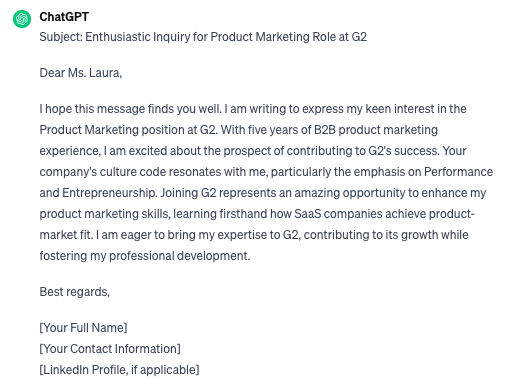
What I Think
Here, I put ChatGPT to a bit of a challenge — my instructions themselves were 164 words long, but I’ve asked it to write an email under 100 words (which it did). Given the tricky circumstances, I think it did a very good job.
The output mentions all of the key points I’ve asked for, without getting into details. The copy is to the point and uses adjectives moderately (which is something I believe ChatGPT likes to overdo).
This email is missing something present in the previous two versions, i.e., information about a CV in the attachment. Still, there is a placeholder for the LinkedIn profile link, so it gives the hiring manager an option to read more about me.
I think this is my favorite version so far — which isn’t surprising, given how specific I was in my prompt. Good job, ChatGPT.
Writing My Own Job Inquiry Email
Now I’m going to write my own job inquiry email, based on the best practices I discussed earlier. Here it comes:
Hi Laura,
I saw that you’ve collected Series D funding — congratulations! On that note, I would like to ask whether you’re planning to grow your marketing team in the coming months. If so, I would love to express my interest in a product marketing role.
A few words about me — I have over five years of experience building product marketing strategies in the B2B space. Among others, I was responsible for:
- Introducing my company’s digital products to the EU market.
- Developing product messaging and positioning that set the company apart from competitors and demonstrated an understanding of the customers’ needs.
- Implementing new features in line with user needs and new technologies on the market.
- Broadening the visibility of the company and core products, improving the adoption rate by 25%.
I know that your company’s values include authenticity, an entrepreneurial spirit, and a focus on job performance.
All these characteristics strongly resonate with me. I’ve always wanted to work for a company that nourishes diversity and appreciates different perspectives, as it’s the best environment for innovation and career progress.
My CV is attached. Thank you for your consideration. If you believe I could be a good addition to the team, then I would love to discuss the possibilities.
Regards,
Kasia Kowalska
What I Did Here
I started by conducting thorough research, and I came across an article saying that G2 has collected D series, which I thought would make a good opener. I listed a few accomplishments, which I thought might be relevant to the brand.
I only included four, as I also attached my CV in case she wanted more details. I explained my interest in working for G2 by aligning with their brand values, which happen to be close to my heart. This shows I did the research.
I thanked the hiring manager for her time and emphasized that I would love to discuss how we could potentially work together. I kept the email short, knowing that recruiters’ time is very limited.
I chose a polite but professional tone of voice and did a little digging to find out who the Product Marketing Lead at G2 was, i.e., Laura Horton, so I could personalize my salutation.
I use this format whenever I am applying for new projects, and it works pretty well, so feel free to borrow it.
Humans vs. AI
Should you entrust your job inquiry email copy entirely to ChatGPT? I would advise against it. Still, you can treat its output as a first draft, as the tool does a good job of suggesting the right structure and the key points worth mentioning.
Your role is to make it personalized and relevant by adding details not only about you but also about the company you’d like to work with. This way, you boost the chances of grabbing the hiring manager’s attention.
When writing your email, put yourself in the recipient’s shoes. They have to go through hundreds of emails per week, and those that come from potential candidates are generic. This creates an opportunity to put your foot in the door and stand out, especially since the position is not advertised.
To sum up, use ChatGPT as a starting point, but don’t rely on it entirely. Let it do its part of the job, and you do yours. Good luck!

I Asked ChatGPT to Write 5 Different Farewell Emails to Send to My Coworkers — Here’s What I Got

Goodbyes are hard. And it’s even more challenging when you must say goodbye through email.
Goodbyes are hard. And it’s even more challenging when you must say goodbye through email.
Recently, I left my full-time teaching position to pursue a writing career. Sending a farewell email to my close colleagues, unaware of my decision to transition to a new job, was bittersweet.
I preferred to say goodbye in person, but sometimes, time only allows for a farewell email. And that’s okay.
If you want to preserve your relationship with your colleagues or keep a line of communication open, you’ll like to send a proper goodbye email.
I asked ChatGPT to help me write a farewell email to my coworkers. This is what I got.
What Chat GPT Wrote Me
It’s easy to get hung up on writing the perfect farewell email.
Do you send a heartfelt message? How do you address the whole team? What about your clients? What do you say to them?
To answer some of those questions, I asked ChatGPT to write farewell emails to various colleagues and partners.
Here’s what ChatGPT wrote for me.
Farewell email for the entire team
Sometimes, it’s best to inform your whole team of your plans to leave your position. In my experience, emailing the listserv means no one misses your important and exciting announcement.
Here’s the prompt you should use in ChatGPT to write your goodbye email to your team.
“I have recently accepted a new position with another company. I am sad to leave my team. Write an email to my team expressing my gratitude and my departure.”
Here’s ChatGPT’s response.

ChatGPT’s response is a decently worded farewell email. The draft considers your feelings while also expressing gratitude for your team. The response isn’t too long or clunky like some ChaGPT responses tend to be.
You can use this response as a first draft of your goodbye message. And, if you want to make it more personal, add a tasteful inside joke that your team will make your team smile.
Pro tip: If you have a particular way you end emails, don’t end your email with “Warm regards.” Instead, stick with your classic email signature.
Farewell email for your work best friend
Work besties, we all have them. And they can be the hardest people to break the news that you’re leaving for a new opportunity.
If you can’t talk with your work bestie in person, consider sending them a farewell email using this ChatGPT prompt.

At first glance, the ChatGPT response is rather long. But when you read it, the response does an excellent job of expressing the connection you made with your work friend.
If you send this to your friend without editing the post, your work best friend will likely recognize the ChatGPT response. And although it is a decent draft of a goodbye message, it lacks the personal touch that can only come from you.
Pro tip: Use this draft as a starting point for your goodbye message. Edit the draft so the message is shorter, and add your spin to the email.
Farewell email for your boss
Emailing your boss your farewell message might be the most challenging part of saying goodbye.
Depending on your relationship with your boss, you might need to write a formal email compared to what you would send to your team or work friend.
I used this prompt to write a farewell message to my boss: “Write me a goodbye email to my boss, who is leaving for a new role.”

When you email your boss about your departure from the company, you’ll want to express your appreciation for your boss’s leadership during your time with the team.
Doing so helps keep an open line of communication and preserves your working relationship with your boss.
This ChatGPT response is a decent draft of what I would send to my boss. It thoroughly expresses gratitude and appreciation.
The overall response is a great starting point for your farewell email. Once again, though, the draft is rather long, so you should shorten it for better readability.
Pro tip: Read your draft out loud to help you better hear the tone of the email. You’ll want your farewell message to your boss to come across as positive.
Farewell email for your clients
If you work in a capacity that allows you to work with and serve clients, you might not be able to speak with them all in person about your departure.
Sending a farewell email to your clients is an easy way to ensure you haven’t missed someone. Plus, it helps open the door for future partnerships in other roles.
I used ChatGPT to draft a farewell email to clients. This is the prompt I used: “I am leaving the company. In my role, I worked closely with clients. I want to keep the door open to my working relationship with them. Write my goodbye email.”
Check out this response.

The generated response conveys gratitude for the client and their business. It’s also worded in such a way that lets the client know you’d like to continue working with them if the opportunity is available in the future.
Once again, the email is lengthy. If I received this email, I would skim it and potentially miss an important detail, like your contact details. If you use this prompt to draft your farewell email to clients, edit the draft.
You might want to include a personal anecdote to show how much you value the client’s relationship with you.
Pro tip: Before sharing your personal contact information with your clients, double-check with your boss to ensure this is okay.
You might appear to be poaching clients from your former company, and you do not want to burn bridges inadvertently.
Farewell email for your direct reports
If you’re in a leadership position, you must email your supervisees about your decision to leave the company. This is just a common courtesy. Plus, your message gives your supervisees a clear, written plan of who they will report to.
Here’s the prompt I gave to ChatGPT to write a farewell email to my supervisees:
“I am a supervisor. I need to tell my supervisees that I am leaving. Please write my farewell email. They will report to the department manager until there is a replacement.”

If you’re leaving your team, you’ll want to express your appreciation and gratitude to them for helping them accomplish the company’s goals. This ChatGPT response accomplishes that.
It also allows you to insert your contact information to continue a relationship with your direct reports.
The response also does an excellent job of explaining to your direct reports who they should report to after your departure. This is essential information your supervisees need to know before your last day in the office.
Pro tip: Bold or highlight your direct reports’ temporary supervisor. That way, this critical detail doesn’t get lost in your message.
The Perfect Farewell Email Template
The generated responses to the farewell email prompts are long. Long emails are okay, but your recipient will often scan or skim the email, looking for important details.
It’s best to keep your farewell email short, concise, and to the point.
Based on my experience with the ChatGPT responses, I’ve created the perfect email template you can copy, paste, edit, and save.
Essential parts of a farewell email
Subject Line
The subject line of your email is crucial. Think of it as your opening line. You need it to convey your message succinctly so it doesn’t get lost in the recipient’s inbox.
You can say something like, “Important Update: Farewell and Thank You,” to guarantee your email will be read.
Greeting
Start off your email with a greeting. ChatGPT’s greeting is, “I hope this message finds you well.” I think this is an appropriate opener to use in any email message.
You might also say, “I hope you’re having a great day!” to express the same sentiment.
Main Message
The main message of your email should be concise. ChatGPT’s responses were lengthy. You can express the same message but in fewer words. Keep the body of the message short — no more than three paragraphs.
Highlight or bold any critical information, like who your direct reports will report to in the future.
Alternate Contact Information
Leave alternate contact information if you want to leave the door open for future relationships. Leaving this part out is okay if you’re uncomfortable sharing your email address or phone number.
Closing
ChatGPT’s closing is usually “Warm regards.” This is a fine response, but it can read too formal. If that’s not your standard closing, choose something more aligned with your style and voice.
Sign-offs like “Best wishes” or “I wish you the best of luck in the future” are excellent closing statements.
A Farewell Email Template
Save this template to your Google Drive and use it the next time you leave your current role.
Subject: An Important Update: Goodbye and Thank You
Dear [Coworkers/Team/Boss/Clients]–
I hope this email finds you well. I have some news to share with you. I have accepted a new position with [new company name] and will be leaving [old company] on [date of departure].
I have sincerely enjoyed working with you and learned a lot while employed here with [company name]. I will forever be grateful for your friendship, guidance, and support during my time here.
Although it is bittersweet, I am looking forward to my new role. If you need to reach me after my departure, you can email me at [email address] or call me at [phone number].
Thank you again for making my time here at [company name] special. I wish you the best in your future endeavors.
Best of luck to you–
[Your name]
Saying Goodbye
If you need to write a farewell message to your team, ChatGPT’s farewell email responses are great starting points for your draft farewell email. Or use the prompt I’ve provided for you — just fill it in with your company’s name.
Either way, include your spin on the message to make it more personal for your team.

Everything You Need to Know About Webinar Marketing

Webinars are a great way to teach customers about your offering or share helpful tips with your audience. They’re low-cost and generate engagement. Plus, they provide your sales team with leads from your signup form. Everybody wins — that is if people actually attend. Webinar marketing is essential to getting those numbers up and your mission out.
Webinars are a great way to teach customers about your offering or share helpful tips with your audience. They’re low-cost and generate engagement. Plus, they provide your sales team with leads from your signup form. Everybody wins — that is if people actually attend. Webinar marketing is essential to getting those numbers up and your mission out.
During my eight years in marketing, I learned several best practices for hosting a successful webinar. That includes how to build a marketing campaign that gets participants through the digital doors. We‘ll explore best practices below. Then, we’ll create a mock campaign to put these tips into practice.
![Download Now: Free Marketing Plan Template [Get Your Copy]](https://no-cache.hubspot.com/cta/default/53/aacfe6c7-71e6-4f49-979f-76099062afa0.png)
Let’s get started.
Table of Contents
- Benefits of Webinar Marketing
- What Makes a Webinar Campaign Successful?
- Webinar Marketing Best Practices in Action
Benefits of Webinar Marketing
There are lots of ways to amplify your brand’s voice, but webinars provide you with a unique opportunity. You can tap into knowledge straight from the specialists. That includes internal experts already at your company or respected thought leaders in your industry. In fact, the Content Marketing Institute applauds webinars as one effective way to broadcast your message.
Below, HubSpot’s Kaitlin Milliken explores some benefits she’s seen from her time working on webinars. Milliken worked on webinars for three years in a previous role, booking guests, marketing the webcasts, acting as a host, and evaluating performance data.
Lead Generation
In her role at a business news outlet, Milliken worked with the publication’s partners. In her experience, she found that sponsors were most interested in partnering for webinars.
“Why? Well, lead generation made all the difference,” Milliken, a senior program manager, recalls. “People had to register for the webinar, so our sponsors knew that these were business leaders struggling with issues their consultancy could actually solve.”
Milliken says that lead generation was much more effective in finding likely customers than a generic social media post or mention in a newsletter. Beyond that, both the sponsors’ brands and the publication reached new audiences, thanks to co-marketing efforts.
If your company specializes in multiple subject areas, you can host webinars on each topic. This generates different lists of leads that you can pair with the right representative for outreach.
Great Data Generation
In webinars, leads aren’t the only data that matters. Your webinars can help evaluate how engaged your audience is, what topics matter to them most, and which thought leaders struck up the most engagement.
Milliken has hosted dozens of webinars, including 60 over the course of the COVID-19 lockdowns. She says attendance varied based on the specific topic the show would cover.
“I hosted lots of webinars during the early pandemic. We found that sessions focused on remote work, managing ambiguity, and innovation efforts that improved efficiency performed well,” she says. “Webinars related to startups were less successful.”
Milliken says that attendance data from webinars reflected a larger trend in the business world: More companies were focused on supporting core businesses. The startup ecosystem was less of a priority.
Beyond that, Milliken says her team conducted polls of participants. This let her get a pulse check on how companies were responding to uncertainty and if they found the webinar helpful.
Cost Effective
Concerned about expenses? Webinars are a budget-friendly solution. No matter where you or your attendees are across the globe, webinars bring you together without the travel costs. Plus, you can chat with experts in your field, no matter where they’re located. No need to pay for a flight.
“Big conferences require hotel stays, catering, and transportation,” Milliken says. “While in-person gathering have their place, webinars are a lot lower-lift and way less costly.”
Repurposing Content
Depending on the subject or type of webinar, you can always transform your recording into more content down the road. Your guests may even share the recording on social for an extra marketing push once the meeting ends.
In her previous role, Milliken says, she wrote up an article based on the content of the webinar. She also included important slides and a recording of the full session in the post. She notes that this helped keep the editorial calendar full and share valuable insights with people who couldn’t make the initial recording. You can see a sample below.

What Makes a Webinar Campaign Successful?
Now that you know how webcasts can bolster your brand, let’s focus on how you can run a webinar successfully. You can see best practices below.
Craft irresistible content.
Of marketers, 95% see webinars as important to their marketing strategy. However, the content needs to align with your audience to garner attendees. Before you even set a date for your webinar, you need to find out what matters most to your audience.
“Every year, we polled our publication’s readers to see what was on their mind,” Milliken says of her previous role. “We could then see what webinar topics were likely to resonate. We used that data internally and shared it with partners so they could craft successful revenue too.”
Your team likely already has this data. HubSpot’s Content & Media Strategy Report shows that 64% of marketers conduct research to understand what types of content their audience is most interested in. Beyond that, 59% said these audits of current and past media strategies to inform future tactics.
Once you have a subject decided, you’ll want to build a compelling slide deck or have a short list of super-star thought leaders to interview. Slides with helpful, fresh data or insights for people your audience looks up to can help pique interest.
Create your landing page.
As soon as you have a date set for your webinar, it’s time to start promotion. The first thing you’ll need to do is build a landing page. This will be the digital portal where you promote your webinar and the hub for people to sign up.
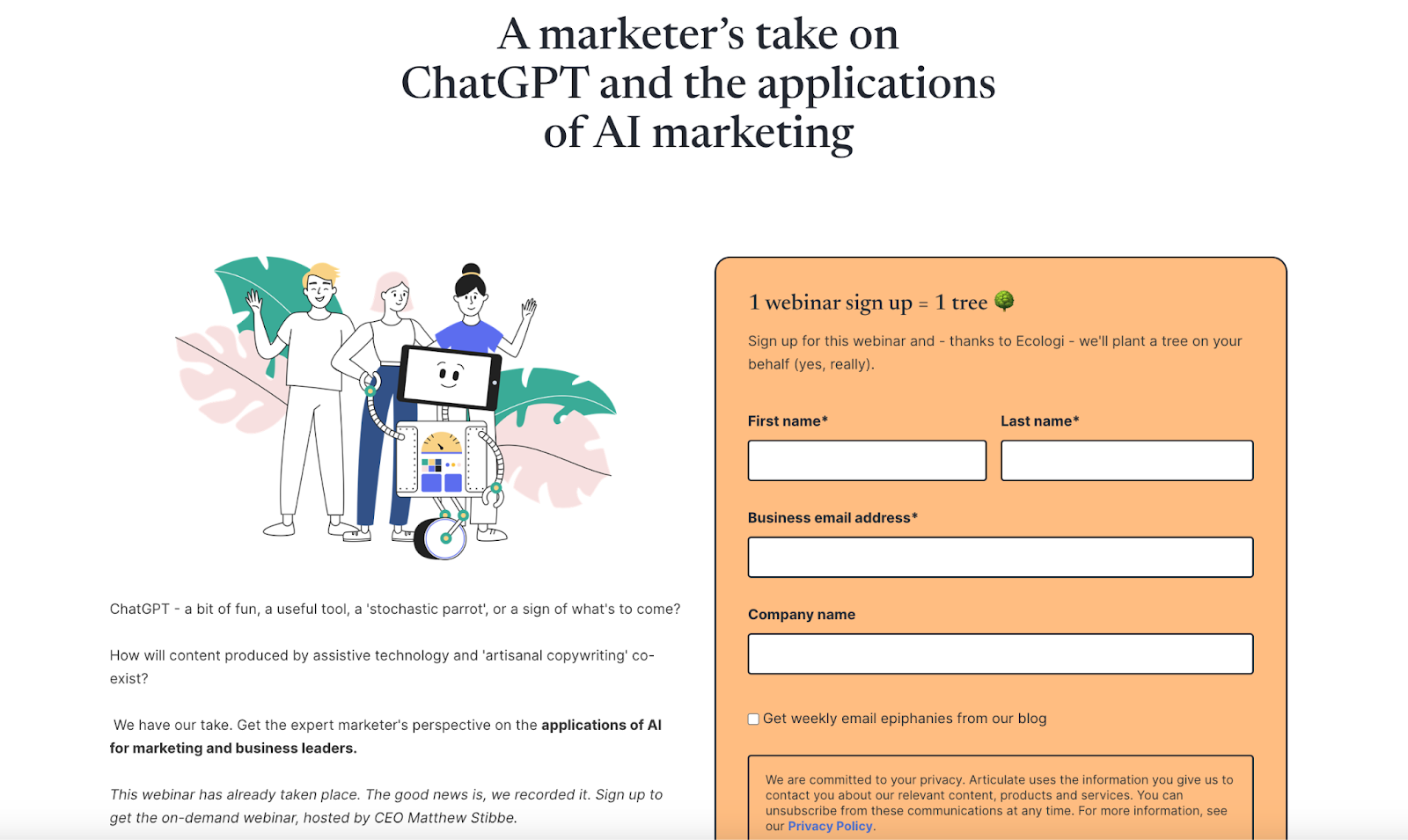
Let’s take a look at the landing page above. Note how it includes the following:
- A catchy headline. You’ll want your headline front and center on your page, incorporating search-worthy keywords where possible. Remember, your headline is only as good as your content, so pick a solid concept upfront.
- A description of the webinar. Your landing page will need a brief description of what your participants will learn. This is also the spot to mention any guests joining your presenter. This is another area to get that extra SEO juice.
- A lead generation form. At a minimum, you’ll need your participants’ names and email to send them updates. However, if you plan on doing sales outreach afterward, the person’s company name and title may also be helpful.
- Interesting imagery. All text pages lack visual variation. Be sure to include art that’s consistent with your branding.
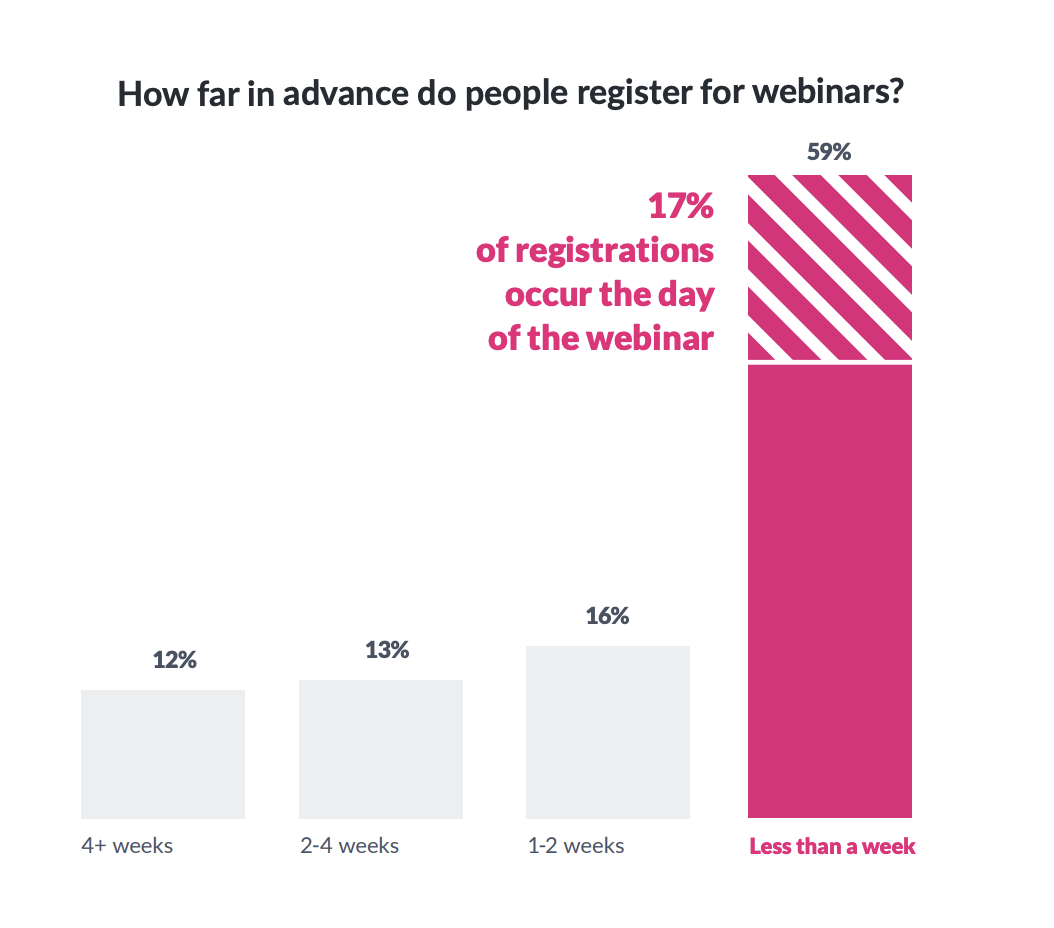
According to GoToWebinar, 59% of registrants sign up for a webinar the week it’s scheduled. However, 41% sign up before that window. Make sure you give yourself at least one month to promote your landing page.
Leverage email newsletters and social media.
Once you have a landing page put together, it’s time for promotion. Simply putting a form on your website won’t be enough to generate an audience. According to GoToWebinar, email is the top channel for promoting these online gatherings. Of its 250,000 survey respondents, 57% cited email as their top promotional channel.
Let’s take a look at this email about an upcoming webinar for the learning management platform TalentLMS.
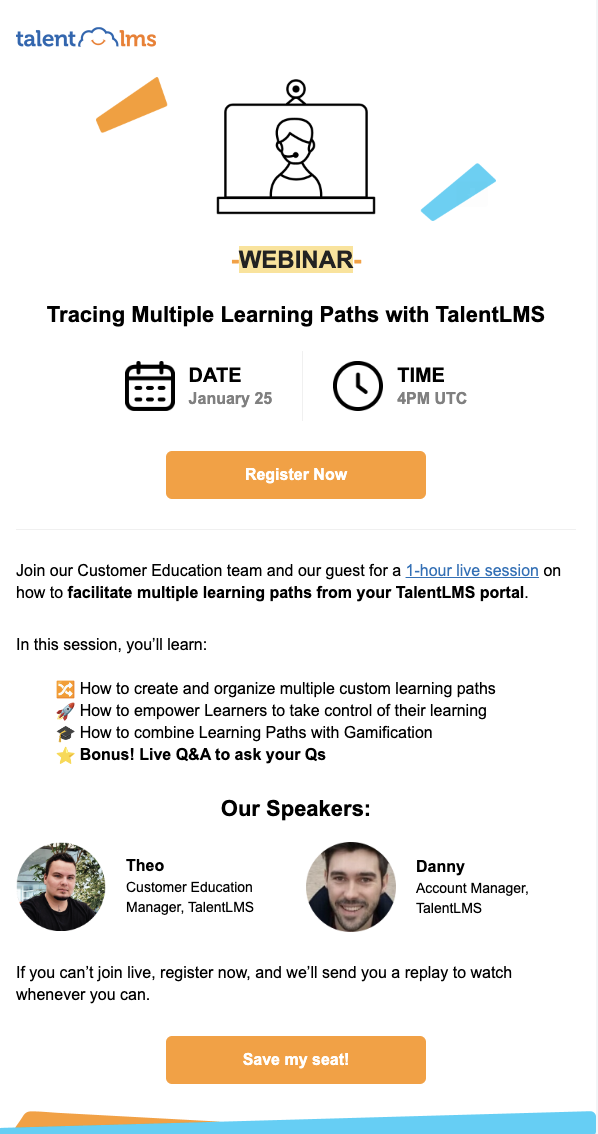
This email covers all of the key points potential audience members should know:
- The topic of the webinar is clearly stated in bold.
- The email gives three key takeaways attendees can expect to learn from the session.
- Speakers are clearly listed in the copy.
- There are two prominent CTAs for people to sign up.
You’ll want to send multiple emails in advance of your webinar. That includes a last-minute signup push on the day of your event. Around 17% of people register for webinars on the day they occur. You don’t want to miss out on the stragglers.
Social media can be another helpful tool to promote your webinar.
“When I worked on webinar content, I made custom graphics with varied text to promote the topic of our discussion,” Milliken says. “You need to make sure to cover important keywords, have striking visuals, and — if you have speakers — include an identifiable picture of them.”
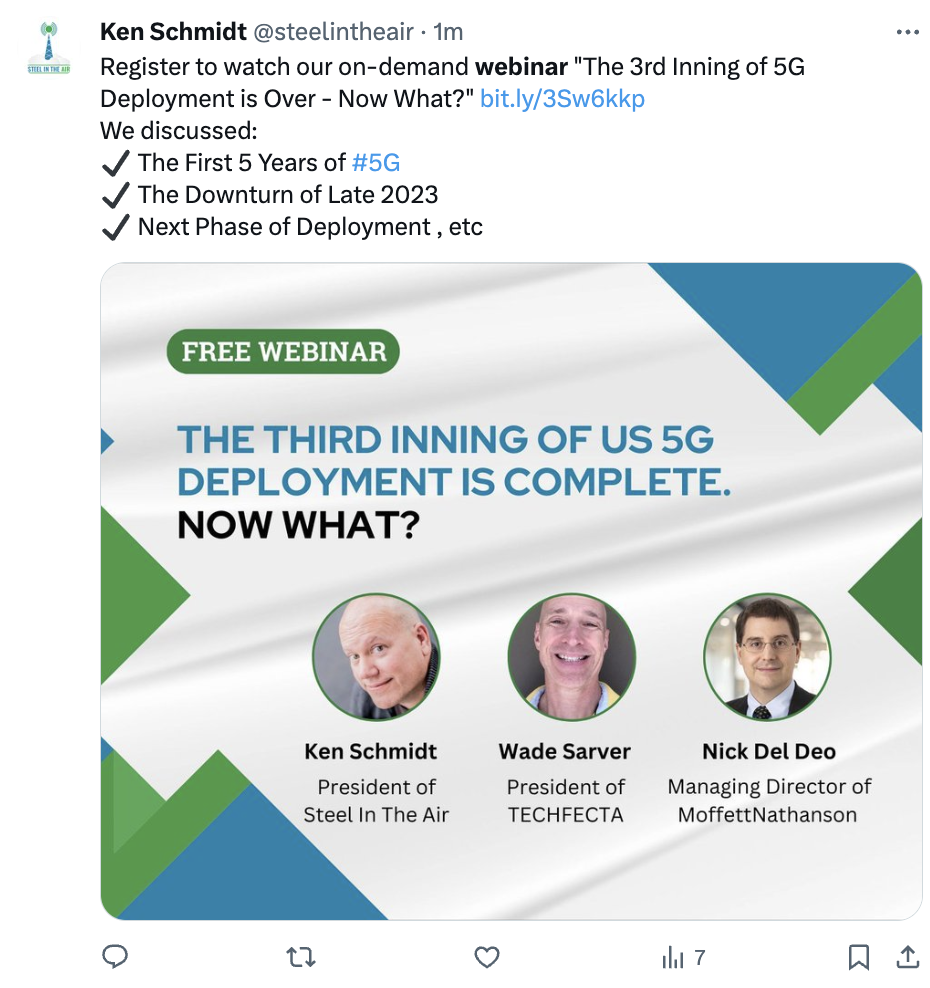
This webinar post for a conversation about 5G hits all of these key points. You can clearly see what the topic of discussion is and who’s participating. Plus, the webinar follows brand guidelines and colors.
Co-promote with your guests.
Including guests in your webinar is a great way to garner interest in your session. Oftentimes, especially if your expert has influence, you can grow your audience to include people who are new to your brand.
“I hosted a webinar session once with Steve Blank, a thought leader in the tech space. It was one of our most popular sessions. People who follow his work joined our webinar, even if they had never heard of our publication,” Milliken says.
Be sure to integrate your guests from the start. If you can get their input on your topic and slides, they can point out areas where they could share their expertise. This also increases their engagement and investment in the webinar.
From there, you can share assets for them to promote on their distribution channels. They can include your webinar in their email newsletter and on their social media pages. This will help you reach the widest audience possible.
Delivering a webinar that captivates.
Yes, delivering a great webinar is a part of your marketing strategy. You need to lead with your best and ensure that attendees are impressed by what you have to offer. Tech issues, disorganization, and a lack of helpful content could even hurt your brand.
Follow these quick tips to run a smooth webinar:
- Run a rehearsal. This is an opportunity for your presenters to test their technology and meet with their guests. You don’t have to do a full run-through, but this is a great opportunity to address any technical questions.
- Have an outline. Reading a script word for word sounds stiff. Delivering a presentation completely off the cuff only works if you’re a master presenter. Split the difference and have an outline with bullet points you want to cover.
- Have your presenters show up early. Five minutes before the show starts, you want to make sure everyone is present.
- Have a backup plan. You can’t prepare for everything. Your internet might cut out. Your guest could get sick. Make sure you have backup ways to dial in and backup plans to fill time.
- Make time for Q&A. A great presentation sparks more thinking and thoughtful questions. Try to leave at least five minutes for Q&A to engage with your audience. You should allot even more time if you have a superstar guest.
Remember, the people who love webinars will want to attend future sessions. Use their first webinar with you as a way to hook them for more.
Promote your recaps (and promote your next webinar).
As mentioned above, consider recapping your webinar. If your session has helpful information, you can post it on your website along with a recap. This is not only a way to show people what they missed, but it can also increase interest in your future sessions.
Webinar Marketing Best Practices in Action
In the grand theater of webinars, your brand isn‘t just another act — it’s the headline show. With sessions led by these mavens of marketing, you’re not merely attending; you’re part of a marketing revolution that leaves your audience cheering for an encore.
Neil Patel Digital
Step into a session with Neil Patel, where the digital marketing wisdom flows as smoothly as your favorite playlist. Each piece of advice is a hit single, making SEO and content marketing the headline acts that leave you amped up and ready to rock the digital world.
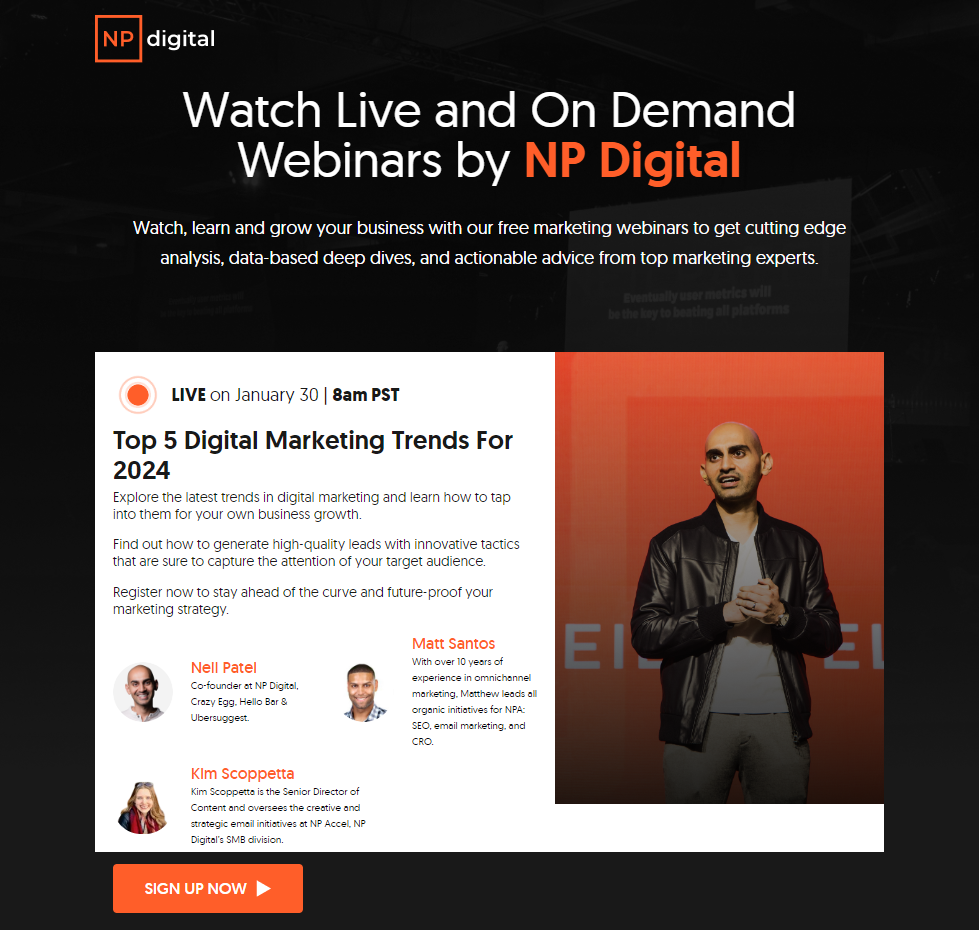
The webinar below covers top marketing trends for the year. I love how the session structures the topic into a numbered list. This helps increase interest. I’ve noticed that webinars with a number in the title tend to perform better than those that don’t.
Beyond that, each speaker’s name is followed by a short bio. This helps audience members know exactly who they’ll be learning from.
Content Marketing Institute
Now, imagine joining the Content Marketing Institute’s webinars. It‘s like being at the coolest industry conference, where content marketing gurus drop knowledge bombs that resonate with every marketer’s core. It’s an all-access pass to the VIP lounge of content strategies and storytelling finesse.
Content Marketing Institute offers a great example of leveraging past webinar content. If there are no upcoming webinars, the page displays past sessions that viewers can watch on demand. Beyond that, the posts lay out how long the session is. Users will know from the get go if the content fits in their schedule.
Marketing Nation Online
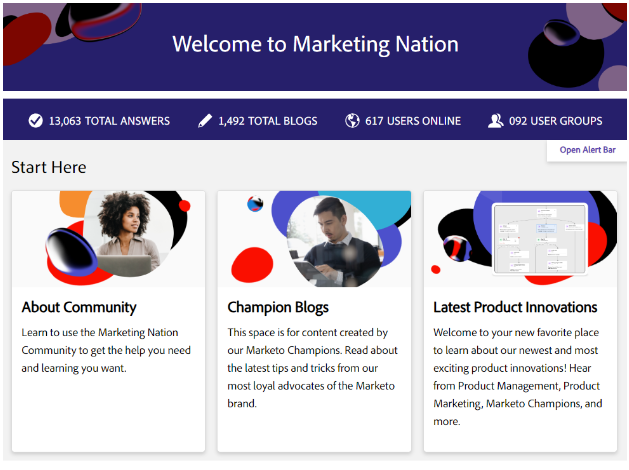
Don’t miss out on Marketo’s “Marketing Nation Online” series either. They take the complex world of marketing automation and spin it into a narrative as compelling as the most gripping podcast series. Each webinar is a chapter that weaves the intricate tapestry of customer relations and engagement strategies.
I love how Marketo takes the series approach to webinars. That’s a great way to hook your audience so they tune in for the next installment.
Getting Started
Navigating the webinar waters takes a mix of guts, wit, and a bit of tech know-how. Every step, from dreaming up content that sticks to mastering the tech waltz, hammered home the power of paying attention and keeping the crowd locked in.
It’s a blend of good old storytelling, high-flying interactive moments, and a tech setup that’s solid as a rock. That’s the recipe for a webinar that doesn’t just talk the talk but truly sings and swings with the audience.

7 Marketing Questions Teams are Asking in 2024 (+Data & Insights)

In 2024, marketers have a lot on their minds. With the rapid adoption of AI, significant changes in the search landscape, and an uncertain economy ahead, knowing how to lead your team to success seems daunting.
In 2024, marketers have a lot on their minds. With the rapid adoption of AI, significant changes in the search landscape, and an uncertain economy ahead, knowing how to lead your team to success seems daunting.
When I’m in these situations, I take a deep breath and go for a walk to clear my head. Once I have a steady mind, I start by asking myself questions that can help guide my marketing efforts.
Knowing the customer, assessing user preferences, and knowing what to measure drive our field. The right marketing questions can help you find these essential answers.
So, let’s dive into seven essential marketing questions to guide your marketing soul-searching this year.
How can you measure your customer experience?
How do users perceive your company?
Which competitor do users prefer and why?
Why do certain pages have high bounce rates?
How has your customer experience changed over time?
Is the omnichannel experience consistent?
What content performs best on social media?
How can you measure your customer experience?
25% of marketers planned to use interviews for the first time in 2023. The HubSpot team also found that 50% used video formats on TikTok, Reels, YouTube Shorts, and more to keep up with the demand for fast, bite-sized content.
In my experience, I dabbled in a bit of everything. LinkedIn posts, social media ads, direct mail, you name it.
What’s the common thread here?
Innovation. As Beth Comstock wisely notes, “Marketing’s job is never done. It’s about perpetual motion. We must continue to innovate every day.”
For instance, I dedicate an hour of my day (Monday to Friday) to brainstorming. Is anything working well? Is something not looking so hot?
So, while you might focus on metrics to measure your customer experience, don’t forget to pinpoint what’s resonating already. That’s what marketing is all about, at its core: connection.
If you want to understand, leverage, or optimize how you interact with customers, take a look at the touchpoints that shape the customer journey. Everything from the initial engagement to post-purchase.
This gives you feedback that includes surveys, social media listening, and interactions. You get a better idea of what your customers like and dislike.
It’s this collection of data and constant tinkering that’ll help you measure the customer experience.
It’s all about improving over and over, so don’t be afraid to adjust your strategy, take advantage of insights, and match your marketing to your audience.
Here are a few things to track that might help you reveal patterns, sentiments, and preferences so you can better understand the areas that need some improvement:
- Net Promoter Score (NPS).
- Customer Satisfaction Score (CSAT).
- Customer Effort Score (CES).
- Customer Lifetime Value (CLV).
- Churn rate.
- Retention rate.
- Support ticket trends.
Tracking and innovating will help you match your marketing efforts with customer expectations and get results.
Pro tip: Continuously refine and align your efforts with customer expectations through innovative marketing strategies and comprehensive data metrics.
Best for: Marketers looking to not only keep up with ever-changing demands and improve the customer experience. It’s also great for marketing teams looking to stay on the cutting edge of innovation.
How do users perceive your company?
Over one in five Gen Zers and almost 25% of Millennials have contacted a brand on social media. It could be a persistent problem or a general question, but either way, they used social media to get in touch.
In my experience, customers and prospects alike contact me via Facebook, LinkedIn, and even Instagram sometimes. It’s a new age. It used to be all in person, via email, or on video calls.
While this is just a sign of the times we live in (and a smart use of convenient technology), it’s also created a new issue for marketers.
Social media managers now have to route customer service questions to the right people—and if they don’t, it reflects poorly on the brand overall.
Nothing screams “incompetent and disorganized” like painful customer service rerouting.
Or, as the KB Marketing Agency aptly puts it, “Ignoring online marketing is like opening a business but not telling anyone.” It shows how important it is to have a cohesive online presence.
Thanks to data-driven insights, we can understand user perception. An online review, social media mention, and sentiment analysis are all good ways to gauge where a brand stands with users. It’s a good way to know what users think.
Addressing perception challenges involves adhering to the insights of marketing experts like Bozoma Saint John, who says:
“As a marketing and brand advocate, you should be able to take products and services and match them to what’s happening in pop culture.”
A brand’s story should align with cultural currents to ensure resonance and relevance.
Creating a brand narrative goes beyond selling. Connecting with users authentically goes beyond transactions. Understanding user perception requires a balance of visual appeal, online presence, and cultural trends.
Companies can easily do that with the help of data insights and marketing wisdom.
Data analytics, customer feedback, and surveys help with customer perception. Even something as simple as changing out your products and services to stay relevant can help build long-term customer relationships.
Pro tip: Focus on your customer feedback, have your brand narrative align with what’s trending, and always leverage your insights to build genuine and lasting relationships.
Best for: Marketers looking to develop genuine relationships with their audiences and improve brand perception.
Which competitor do users prefer and why?
It’s no secret: businesses that keep up with the latest marketing trends and tech innovations seem to do better than their competitors. It shows a willingness to learn, adjust, and stay relevant.
The issue is that while 90% plan on using short-term video to increase or maintain their investment, another 56% plan to increase their investment in TikTok.
That might not seem like an issue at first glance, but where’s the human element?
When asked which competitor users prefer and why, Brian Halligan, co-founder of HubSpot, provides a fundamental perspective by asserting, “It’s not what you sell that matters as much as how you sell it!”
He’s onto something.
Building on this, Dharmesh Shah, chief technical officer and co-founder of HubSpot, adds a human-centric layer to the discussion.
He points out, “Many companies have forgotten they sell to actual people. Humans care about the entire experience, not just the marketing, sales, or service. To really win in the modern age, you must solve for humans.”
So it’s not enough to tap into the latest and greatest trend. Using the right channels only gets you so far. At the end of the day, you have to have a seamless, engaging sales approach.
There are a lot of factors that make up customer experience, as Shah points out. After all, making customers happy should be your priority.
Positive experiences are more important than products. Making the sales process easier, communicating clearly and transparently, and understanding your customers’ needs and preferences are all important.
Being innovative helps, but it also helps businesses stay adaptable. If they can adapt to ever-changing consumer expectations, they’ll be around for a long, long time.
As highlighted by KB Marketing Agency: “Ignoring online marketing is like opening a business but not telling anyone.” This emphasizes the importance of leveraging digital channels to engage with audiences, be visible, and stay relevant.
Businesses can focus on the product and the entire user experience with these insights and advice from industry leaders.
Prioritizing innovation, understanding the human element, and embracing digital visibility can help businesses shape and influence user preferences.
Pro tip: Focus on the customer experience, and stay flexible to adapt to changing consumer expectations in the digital age.
Best for: Marketers looking to stay competitive by emphasizing a seamless, engaging sales approach and understanding the human element in customer interactions.

Why do certain pages have high bounce rates?
22% of social media marketers report that creating engaging content is their biggest challenge. Likewise, another 22% say gaining and keeping followers is their pain point.
For me personally, it’s gaining and keeping followers. On one hand, you can gauge what customers want to see and hear from you online, but on the other, the numbers often contradict that.
However you slice it, the real issue is the bounce rate. They represent the percentage of visitors who leave after viewing one page. For online businesses, this presents a serious challenge.
Recent data analysis shows that bounce rates are affected by several factors. Let’s take a few at the two most common ones.
Factors Influencing Bounce Rates
- Integrated marketing strategies. Betsy Holden, senior advisor at McKinsey & Co., underscores the potential of integrated marketing, stating, “Integrated marketing offers opportunities to break through to consumers in new markets.” This insight emphasizes the effectiveness of cohesive marketing strategies in reaching diverse consumer segments.
- Subtle marketing approach: Tom Fishburne, CEO of Marketoonist, highlights the importance of subtlety in marketing, noting, “The best marketing doesn’t feel like marketing.” This perspective advocates for a nuanced and less intrusive marketing approach, focusing on creating content that seamlessly integrates with the user experience.
This is something I’ve noticed on my end. The pushier the message, the worse the conversions. People love buying things but don’t like feeling like they’re being forced or bullied into it.
Instead, they value genuine messaging that focuses on what they stand to gain, both now and later.
How to address high bounce rates
High bounce rates require a comprehensive strategy.
Michelle Stinson Ross, managing director of marketing operations at Apogee Results, offers great advice, stating:
“To continue winning the internet marketing game, your content has to be more than just brilliant — it has to give the people consuming that content the ability to become a better version of themselves.”
The best content has transformative power when it’s informative and helps people grow.
Practical steps for reducing bounce rates
Addressing high bounce rates requires a fusion of quantitative data analysis and strategic marketing insights. These perspectives collectively underscore the significance of:
1. Aligning marketing endeavors with cultural trends.
Staying attuned to current cultural trends and consumer preferences is crucial. The best way to capture audience interest and reduce bounce rates is to analyze and incorporate popular topics in your marketing content.
2. Integrating strategies across diverse marketing channels.
A cohesive approach across various marketing channels ensures a unified brand experience. By keeping things consistent, you build trust and encourage visitors to look around.
3. Creating content that resonates with your audience.
Making relevant content means understanding your audience’s needs and pain points. Personalizing the user experience can lead to longer page visits and decreased bounce rates.
Pro tip: Improve bounce rates by aligning marketing with current cultural trends, implementing consistent strategies across diverse channels, and creating tailored, persuasive content.
Best for: Marketers looking to enhance online engagement and reduce bounce rates.
How has your customer experience changed over time?
If there’s anything marketers understand, it’s how customer demands and expectations change on a dime. Remember NFTs?
One in three planned to stop using them last year, and 29% planned to cut out the metaverse and audio chat rooms.
But these areas were once hot—and the buzz around them had people thinking they were here to stay.
It’s not just trends, though. Something else that has changed is the level of personalization that goes into the customer experience.
Customer engagement starts at the beginning of the customer journey, so businesses have to figure out what they want.
In the beginning stages, I focus on engaging with people. I show genuine interest, start conversations, and, most importantly, listen.
Once I know exactly what they’re struggling with, I talk about the key points of the offer that help resolve their specific problem.
For existing customers, it’s different. I focus on their overall satisfaction, make adjustments based on their preferences and needs, and see which other areas I can help with.
Data trends have helped us understand personalized interactions better, as they helped us reevaluate outreach methods and create content tailored to individual interests and needs.
“Don’t push people. Meet them where they are,” says Meghan Keaney Anderson, vice president of Marketing at HubSpot, emphasizing the importance of aligning strategies with customers’ current journeys.
Customers should be met on their terms instead of being dictated to.
Steve Pratt, partner at Pacific Content, adds valuable advice, noting, “People will ignore or skip anything they don’t like. So brands have to start making things they love.”
Taking this insight to heart has helped us create better content. Brands should create content that genuinely connects with people, building meaningful connections and reducing the chance of being overlooked.
Experts always stress how important it is to engage and connect authentically. To stay on top of this changing landscape, we‘re going to evolve with them. It’s our goal to not just meet but to exceed expectations.
Pro tip: Improve your customer experience by going all-in on personalized interactions, studying data trends, and aligning outreach with the customers’ evolving needs.
Best for: Marketers looking to adapt and enhance their customer experience in response to evolving trends and customer expectations.
Is the omnichannel experience consistent?
Blogs, social media shopping tools, and influencer marketing still held the number one highest ROI spot of any marketing channel. Things like podcasts, virtual events, SMS marketing, SEO, and direct mail did well.
So it’s no wonder that being everywhere possible seems to be, well, smart. But just how hard is it to keep track of everything?
The constant vigilance and adaptability to meet consumer behavior changes? Staying dynamic and responsive?
Amrita Sahasrabudhe‘s advice, “take a risk and keep testing, because what works today won’t work tomorrow, but what worked yesterday may work again,” sums it up nicely. We just need to keep improving.
Customer behavior is always changing because that’s just how humans work. Experimentation and adapting are part of the deal.
Of course, that means there is a silver lining: what worked before might start working again, so be flexible and keep that chin up.
In omnichannel experiences, Joe Chernov‘s perspective adds valuable insight: “Good marketing makes the company look smart. Great marketing makes the customer feel smart.”
We should have that mission to empower our customers and create memorable experiences that reflect our brand.
An omnichannel approach is not a goal but a journey. Consistency needs a balance of taking risks, continuous testing, and getting a grip on what’s popular with your audience.
It also means being open to changing preferences tomorrow. It’s not just about looking smart but making our customers feel smart.
Pro tip: Maintain a consistent omnichannel experience by embracing dynamic marketing strategies, continuous testing, and staying adaptable to changing consumer behavior.
Best for: Marketers looking to establish and maintain a dynamic and customer-centric omnichannel presence.
What content performs best on social media?
Odds are you can guess what kind of content performs the best. It’s engaging, it offers a chance to inject some personality, and it’s designed to keep people invested until the end, if all goes well.
Any guesses?
If you said video, you’re right. It was the most popular and effective media format for the fourth year in a row in 2023. 50% of marketers leveraged it as the cornerstone of their marketing strategy.
It makes sense—it takes both creativity and strategy, which helps when you’re trying to go beyond your standard engagement metrics, creating a community and authentic conversations.
Krystal Wu, social media community manager at HubSpot, encapsulates this approach with her insight:
“Social media marketing is about creating content that brings your audience together as a community and inspires authentic conversations while increasing your brand’s awareness.”
Wu’s perspective forms the cornerstone of our social media strategy. At our core, we strive to do more than just grab your attention. Active engagement and conversation foster a strong sense of community.
You don’t just want to broadcast a message. You want real connections.
When it comes to social media, storytelling is essential. Sam Balter, senior marketing manager of podcasts at HubSpot, emphasizes:
“Nothing sticks in your head better than a story. Stories can express the most complicated ideas in the most digestible ways.”
In other words, a really solid story has a massive impact. Anecdotes, testimonials, or more elaborate storytelling formats are powerful. It’s easier to understand complex messages with them, especially with social media scrolling constantly.
Pro tip: Engaging video content and storytelling can help you build relationships with your audience and inspire authentic conversations.
Best for: Social media marketers looking for ways to enhance engagement and build a strong community presence.
Empowering Tomorrow: Final Insights for Marketing Success
Marketing in 2024 is exciting. You‘ve got challenges, like always, but you’ve also got some pretty cool opportunities.
So, while these seven key questions might be food for thought on paper, they can also help you and your marketing team better tackle the year’s hurdles. It’s all down to how you see it.
Each one of these questions gives you a key to the door that can help you improve your customer experiences, have better social media storytelling, or even just a deeper understanding that leaves trends in the dust.
After all, you are only successful in marketing if you spark that human connection. This means every insightful data you have is a step closer to an authentic conversation. So, will you use that information to prioritize heartfelt interaction?

Did You Get This? 14 Unprofessional Email Mistakes I’d Avoid at All Costs

Dear Sir/Madam: If your inbox is like mine, it’s full of emails that sound like either a nineteenth-century love letter or a text message from a teenager.
Dear Sir/Madam: If your inbox is like mine, it’s full of emails that sound like either a nineteenth-century love letter or a text message from a teenager.
To be fair, this isn’t anyone’s fault. As a society, we simply don’t teach email etiquette or retrain professionals as standards change. If you were fortunate enough to take a Business Writing class, you likely learned salutations (“Dear Sir/Madam,” “To Whom It May Concern,” “Cordially,” etc.) and how to format a cover letter and write a formal complaint.

But as for everyday emails? You’re on your own — until now.
I’ve compiled the top mistakes people make in business emails with 14 examples of unprofessional emails for you to learn from.
14 Unprofessional Email Examples
Wondering if you sent an unprofessional email, or if your coworker was out of line? Scroll through these unprofessional email examples to see today’s acceptable and unacceptable email etiquette.

1. Flubbing Someone’s Name or Gender
Hi Brandy,
Could you add this to the agenda for our meeting on Monday?
Thanks,
Gil
Maddy, Maggie, Molly — I’ve heard it all. I had one boss who called me Brandy for three whole months. I don’t go by Amanda, so an email with that salutation is a dead giveaway that that person doesn’t know me.
Learning someone’s name and preferred pronouns matters. Massacring someone’s name is the number one way to kill your message before it’s even read.
What to do instead: Double-check the spelling of someone’s name before you hit send, and don’t make assumptions about gender. If you realize you made a mistake, apologize! You may have missed your chance in a cold email scenario, but with coworkers or clients, acknowledge the mistake and move on.
2. Missing Salutation or Signature
Can someone follow up on this for me?
Email communication has become less formal, but there still needs to be a greeting and a sign-off. This is especially true for a new email but also for replies. Many people don’t have a reply email signature, so emails in a group thread can get confusing when an email isn’t attributed.
What to do instead: Set up one email signature for new emails and a shorter one for replies. Use “Hi [First Name]” or “Dear [First Name]” to open an email and a sign-off with at least your first name at the bottom. You don’t need a clever sign-off for emails, but you can choose one if it suits you.
3. Messy Grammar and Spelling
Hello
I’m reaching out to inqiure about a project. We are urgently in need of writer for an upcoming website project. Its for a client in the automotive industry. Please let me know if their is a good day to connect to discuss further.
Best wishes,
Todd
As a writer and English major, I appreciate good grammar but realize that it’s not everyone’s strength (nor is English everyone’s native language). While most people will overlook one typo, it still doesn’t leave a good impression. When you have multiple typos, or the reader can’t understand your message, you run into serious issues.
What to do instead: Proofread your emails yourself, and use tools like Grammarly for Chrome to catch anything you miss.
4. Bad Cold Emails
Hello,
You haven’t responded to attempts to contact you, so I’m zooming into your inbox again.
Are you looking for MASSIVE growth?
Your website looks good but has some serious bugs in the code that make it difficult to find in Google. If you want to grow your business instead of leaving it in an internet hole, look no further!
Below I am sending you a report in which you will find a list of the most important errors in the website code, after the correction of which your website will be re-indexed in Google and will reach significantly higher positions in the search engine in a short time.
Brock
Following up with prospects is a key part of sales, but there’s a right and a wrong way to do it. The best cold emails are personalized, brief, and to the point. Sending relentless follow-up emails that shame the recipient and don’t add any new information or value is a surefire recipe for failure.
What to do instead: Be personable and polite. Show that you’ve researched the person and their business and end with a clear call to action.
5. Rude Follow-Ups
Hi Melanie,
Did you see my last email?
Karen
Whether you’re writing a coworker or a client, beware of the passive-aggressive or straight-up rude follow-up response. There’s nothing worse than receiving an email at 4 p.m. on a Friday and having a note like this waiting in your inbox on Monday morning. It’s even worse if this person passive-aggressively copies your boss on the note.
What to do instead: Wait an appropriate amount of time (1-2 business days) before following up politely to check-in. If you need a response by a specific deadline, remind them why. If it’s a true crisis, use an alternate method of communication like Slack, a phone call, or walking over to their office.
6. Being Overly Friendly or Informal
hey bro!
how’s it kicking? hope you’ve made it through the week! 🤪
checking if you need any help with the report. if you’ve already started, awesome sauce! 🌮 LMK if you need me to crash in with some ideas!
see you around
Kyle
No email to a client, boss, or stranger should look like the one above. To keep emails professional, keep the slang, emojis, and lack of punctuation for text messages. There is some flexibility for email threads with close coworkers, but keep it limited and use common sense.
What to do instead: Write in complete sentences. Slang can be exclusionary when people don’t know it, so stick to plain language. Once you know someone really well, you can loosen up a little.
7. Being Overly Formal
Dear Madam,
I trust this message finds you well. My name is Jerome, and I represent XYZ, a leading provider of videoconferencing solutions.
This platform is trusted by Fortune 500 companies and is designed with the highest standards of excellence. Our features, including HD audio and screen sharing, allow you to facilitate remote meetings and grow your business with ease.
I would be honored to schedule a brief video call at your earliest convenience to give a personalized demonstration of the software and discuss your needs. Could you apprise me of your availability next week?
With kindest regards,
Jerome
On the other extreme, there is such a thing as being too professional. Overly formal emails can seem rigid, impersonal, and out of touch. There’s no need to use the formal Mr./Mrs. designations anymore — a first name will do unless someone has a special title. While some situations or industries might call for more formality than others, it’s generally difficult to form a connection with someone when you write in this style.
What to do instead: Write in complete sentences and follow email etiquette, but cut down on overly wordy, formal phrases in favor of more precise, everyday phrases that communicate the same message. You can show respect without being archaic.
8. Bad Subject Lines
Subject: hello?
Most bad subject lines are either vague (hello, checking in, can we chat?) or spammy. Keywords like “free,” “earn cash,” or “no obligation” can trip email filters and land your email in the trash bin as they look like phishing emails.
The worst subject line? Putting none at all.
What to do instead: Make your subject line descriptive but short (under 50 characters). The reader should have an idea of what the email is about before they open it. Use power words to raise the chance of someone opening it.
9. Ambiguity/No Call-to-Action
Hi everyone,
Those are some great thoughts and suggestions. I like where this is going. Let’s get these ideas in motion!
Clarisse
We’ve all been on group email threads where people throw out ideas, others respond with enthusiasm, and then nothing happens. Does this sound familiar? Ambiguity is unprofessional because it leaves the other person unclear on what will happen next.
What to do instead: End each professional email with a specific call-to-action. Clearly state what responsibility you plan to take on, give a timeline, and then list additional action steps to delegate.
10. Missing Details
Hi everyone,
Sorry, I forgot to include the powerpoint! Here it is. A few of you asked where the lunch and learn is being held on Friday, and it’s in the Sky Room.
Thanks again,
Melissa
There’s nothing more embarrassing than sending out an important email and forgetting an important detail like an attachment or date. If you’re responding to an email with multiple questions, it’s easy to write back and answer one question while forgetting the other. While it happens to the best of us (I’ve been there!), you can lower the chance of this happening.
What to do instead: Take your time writing, and proofread your emails. If you’re replying to an email, proofread the original one to make sure you answered everything. If it’s a mass email, ask someone else to proof it for you to make sure that nothing is missing and that everything makes sense.
11. Using Reply All Incorrectly
Can everyone just stop replying all? Thx
We’ve all heard reply-all horror stories. Most reply-all mishaps are accidental: Either someone sends a message to a much larger audience than they intended, or they send a private message to a group by hitting “reply all.”
What to do instead: If you need to send a 1:1 reply to a thread, check the recipients list or consider starting a fresh email. If you find yourself the recipient of an accidental reply-all message, don’t make it worse by replying to everyone. Contact the sender individually to resolve the issue.
12. Rambling Emails
Hello there!
How’s your week been treating you? I can’t believe we’re having another subzero week. I tried taking my dogs out for a walk yesterday, but we only made it a few blocks before they were both shivering and we had to head back! I’m ready for summer already.
Next week, I’ll be coming into the office on Tuesday (can’t miss Taco Tuesday, right?). I’m braving the commute for a couple of days since we have our all-hands meeting! Would you be up for grabbing a cup of coffee? I’d love to catch up and hear about what’s new in your department.
Jackie
It’s good to establish rapport with coworkers and business contacts, but long, rambling emails simply aren’t effective. If it’s a cold email, the reader won’t make it to the second paragraph. In a workplace context, your coworkers may not have the time or energy to get through long personal anecdotes and reply in kind.
What to do instead: Respect the person’s time and trim the email to the most important details. Limit any small talk to one line. If you have a lot that you need to say, save it for a meeting or an actual conversation.
13. Gossip and Complaints
Yikes. Can you believe what just happened in the meeting? He looked like he was going to burst a blood vessel after that one comment.
Tina
“Never write down something you don’t want someone else to read.” I received this advice in middle school, and while I don’t think it applies universally, it certainly applies to your work email. Gossip, complaints, or making fun of someone have no place in professional email.
What to do instead: If you have a legitimate complaint about someone, here’s what you should do. Talk to the person directly or to your boss or HR director.
After the fact, document the conversation in a few bullet points in an email. “Hi there, just recapping our conversation today…” That way, you’ll have a record of performance issues or personnel files if needed.
Do you just need to blow off steam about a difficult coworker? Save it for happy hour.
14. Failing to Acknowledge or Thank Someone
Hi Matt,
Glad that’s checked off. Moving on, can we schedule a Q2 strategy call for next week?
Jonathan
When someone has completed work for you or done you a favor, it’s rude not to acknowledge their contributions. Or worse — to take credit for someone else’s work.
What to do instead: When you wrap up a project or simply receive something someone has sent, thank each person for their work and contributions. A little gratitude and recognition in front of their peers will go a long way.
Professional Emails Matter
Whether you’re emailing your boss, a coworker, a client, or a lead, professionalism is important because your emails represent you and your company. Always be sure to re-read your emails to double-check for things like the recipient’s name, typos, tone, and that you included all the necessary info and any attachments.

How to Rebrand as a Content Creator and Stay Relevant [Expert Tips]

Welcome to The Creative, a series that gives content creators actionable advice from professionals in the creator economy. Whether you’re a seasoned creator or just starting out, read The Creative to learn how to grow your platform, improve your content, and stay ahead in the ever-shifting creator landscape.
Years ago, I underwent a total rebrand. Before joining HubSpot, I was content creating for years as a local journalist in Florida. So, most of my social media handles and content were geared toward news and politics.
Welcome to The Creative, a series that gives content creators actionable advice from professionals in the creator economy. Whether you’re a seasoned creator or just starting out, read The Creative to learn how to grow your platform, improve your content, and stay ahead in the ever-shifting creator landscape.
Years ago, I underwent a total rebrand. Before joining HubSpot, I was content creating for years as a local journalist in Florida. So, most of my social media handles and content were geared toward news and politics.
However, I eventually left the news business and started creating content for myself. Soon, my content transitioned from news stories to videos, podcasts, and blog posts about anime, manga, and “nerdom.”
As I’ve said in other blog posts, I’m a hobbyist regarding content creation outside of HubSpot, so I didn’t really think about how my audience would receive my rebrand. Though, I’m sure the change was a bit shocking and confusing.
That said, if you’re a professional who wants to rebrand, you may wonder how to rebrand as a creator and stay relevant. To get some insight, I spoke with creator, blogger, and YouTuber Lisa De La Cruz, who recently went through a rebrand herself.
Here’s her story plus tips for creators looking to switch up their content without damaging their personal brand.
The Challenge of Rebranding as a Creator
How to Stay Relevant Through a Rebrand

Why a rebrand?
There are many reasons a content creator may choose to rebrand. In my case, I changed industries and wanted to create content that had nothing to do with news.
In De La Cruz’s case, the COVID-19 pandemic was pivotal in her decision to change her content.
“I rebranded because, at the height of the pandemic, the content I was creating was very local,” she says, recalling her content that was geared toward her hometown of Reading, PA. “And due to regulations, I couldn’t continue interviewing people in person. It also wasn’t making me happy anymore.”
De La Cruz began shifting her focus toward the anime and manga industry to rediscover her spark and keep creating amid pandemic restrictions.
She would interview voice actors, cosplayers, and anime enthusiasts for her podcast, The Wonder of Anime, and review anime and manga for her YouTube channel and blog of the same name.
“I had slowly started shifting my content in this new direction, and it was really making me happy,” she says. “I realized this is a topic where I can interview people from all over because I don’t have to see them in person. I can use Zoom.”
The Challenge of Rebranding as a Creator
Of course, pivoting to a different niche as a creator isn’t easy, especially if your followers aren’t interested in your new direction.
“There definitely was a change in my audience because, at the time, most of my audience was local, and they were not fans of anime,” De La Cruz says. “So I definitely had a drop in audience in the beginning.”
Fortunately, De La Cruz’s platform grew as she continued in her new niche.
“If I know myself and know the heart of what I’m doing, then I know this is true to me and I just have to push forward that way,” she says.
How to Stay Relevant Through a Rebrand
So, how did De La Cruz grow her platform post-rebrand, and what can you do to make your rebrand a success? Here are some expert tips she says can make for a smooth transition.
1. Consider appealing to an untapped market.
“The new type of content that I was making was unique in the sense that I was covering things that didn’t have much of a spotlight,” she explains, “such as an old series or nostalgic things that people may have forgotten about.”
Over time, De La Cruz says her content began to attract anime and manga enthusiasts who were happy to see her shine a light on cult classics.
“I tapped into a new audience and a specific niche that hadn’t been touched on,” she recalls. “I think that really helped because people were excited to see someone give representation to a series they enjoy but isn’t often talked about.”
So, when considering a rebrand, think about how you can create your own lane and what untapped markets you can appeal to that align with your new direction.
2. Know why you want to rebrand.
While creators must keep up with the latest consumer trends, De La Cruz warns shifting trends and numbers shouldn’t be your sole motivator.
“Really think about why you want to rebrand,” she says. “For me, it wasn’t about growing a different audience — I just wanted to stay true to what I like and am passionate about. I would warn against switching because of numbers.”
Viewers are very perceptive, and De La Cruz says they’ll know if you’re rebranding just to stay in the spotlight. Doing so can foster distrust and make your brand seem inauthentic — and authenticity is invaluable in branding.
In fact, 88% of consumers say authenticity is key when deciding what brands they like and support.
And one key to being authentic is to know your personal brand. In a YouTube video called, Rebrand Yourself & Stand Out on Social Media in 2024, content creator and business coach Troyia Monay says this about personal branding:
“The keyword in personal brand is ‘personal.’ That has everything to do with you. So, what are the things you’re interested in? How do you act? What is your tone of voice? What are some of your hobbies or interests?”
So, when you know the “why” behind your rebrand, consider your personal brand and how your “why” aligns with where you are now or where you want to go.
3. Go all in.
“Go 100% in. If you are in-between and you’re teasing your audience by doing some old stuff and new things at the same time, you can lose people and confuse people,” she says. “That could be a turn-off to your audience.”
De La Cruz says if you do a pivot, make it a hard one.
“I find it helps establish your new audience because you’re not giving people false hope that you’re still going to create your previous style of content.”
For example, when I transitioned to from news to nerdy, I didn’t start by posting news content and slowly trickling in more and more of my nerdy work.
I did a hard reset by changing my social media handles and highlighting my latest work.
4. Communicate your rebrand to your audience.
While a hard reset is necessary, you should still communicate with your audience so they’re in the loop. Depending on how long you’ve been a creator, your audience may have followed you for years before you rebranded your platform.
De La Cruz says it’s important to respect the relationship you’ve built with your viewers and to keep them in the know of your new era.
“There is a relationship between you as a content creator and the audience consuming your content,” she says. “Sometimes doing a hard pivot without making it clear can feel distrustful to your audience, especially if they didn’t see it coming.”
De La Cruz suggests making a clear statement to show appreciation and to allow your audience to decide if they want to follow you on your new journey.
This statement can come in a YouTube video, a social media post, an email, or a newsletter.
5. Have confidence.
Above all, De La Cruz says to be confident in your decision.
“Your rebrand is likely something you’ve been thinking about and weighing on you for some time, so be confident that your rebrand will do as well as your previous content,” she explains.
“You need to believe it so your old audience and newcomers will believe in it and follow your new journey.”


5 Secrets to Achieving Work-Life Balance, According to HubSpot Employees

Welcome to “Marketing Minds”, a weekly column from HubSpot, featuring actionable advice and insights from today’s top marketing experts.
When I started working from home, I thought work-life balance would come naturally. After all, I have no commute and don‘t have to plan what I wear each workday. And when it’s all over, I can close my laptop and turn on the TV.
Welcome to “Marketing Minds”, a weekly column from HubSpot, featuring actionable advice and insights from today’s top marketing experts.
When I started working from home, I thought work-life balance would come naturally. After all, I have no commute and don‘t have to plan what I wear each workday. And when it’s all over, I can close my laptop and turn on the TV.
Now, I realize how difficult it is to achieve a work-life balance, regardless of whether you work remotely or in an office.
If you work from home, you technically live at work — which can skew the balance. And if you work at an office, your commute to and from work can cut into your personal time.
Fortunately, there are ways to balance work and life, whether remote or in-person.
Let’s explore five secrets to achieving a work-life balance, according to HubSpot employees. But first, what even is work-life balance?

What is work-life balance?
Work-life balance describes how your work intersects with your personal life, such as family, leisure, or health. Ideally, you want a balance in which you’re not sacrificing your personal life to keep up with work or vice versa.
Before working at HubSpot, I was a journalist for various TV stations.
Any journalist will tell you it’s easy for the profession to take over your life, leaving very little time for hobbies, rest, or personal relationships — since breaking news never takes a day off.
When I put too much focus on the work, my relationships with friends and family deteriorated, negatively impacting my mental health. On the other hand, when my personal life bled into my professional life, my work suffered.
So, how do you strike the right balance? I spoke to a few colleagues at HubSpot and drew from my personal experiences to provide insight. So, let’s dive into different ways to maintain a healthy work-life balance.
5 Tips for Work-Life Balance
1. Set boundaries.
Boundaries are crucial to balancing your personal and professional lives, regardless of your passion for your job.
“Boundary setting is one of the single greatest powers I’ve been able to uphold in my professional working career,” says Linda Huard, senior technical recruiter at HubSpot. “And, as a part of the boundary setting, I do not install work apps on my personal device.”
That means Slack, work email, and LinkedIn are not on her phone.
“It’s just too tempting to check during non-working hours,” she says. “I tell anyone I work with that when I’m on and in front of my laptop, I am giving 110%, but when I’m off-line, I’m completely off. This means evenings, weekends, holidays, and vacations remain completely mine.”
Huard says to set these boundaries early and hold to them.
Setting boundaries is definitely something I still struggle with regarding work-life balance.
In fact, the night before writing this post, I logged into my work computer at about 9 p.m. and spent the rest of the evening contemplating work instead of unwinding before bed.
So, I can assure you from experience that keeping business apps off your phone or putting your work laptop away after you clock out is an effective way of maintaining balance.
At the very least, it could ensure a peaceful evening before you have to start the day all over again.
2. Practice self-care.
Speaking of peaceful evenings, do you know what I should have done instead of checking my work emails before bed? The answer is my nightly self-care routine: good food, light music, and a little reading before sleeping.
Practicing self-care is vital not only to work-life balance but also to overall mental clarity and well-being.
A national survey shows that 64% of Americans who practice self-care report experiencing enhanced self-confidence, and 67% saw increased productivity. Furthermore, 71% say they saw a boost in overall happiness.
“One thing that has been quite helpful to me [regarding work-life balance] is focusing on self-care,” says Olurotimi Moses, our corporate growth representative. “For me, that looks like meditation, music, candles, and bubble baths. When I can, I treat myself to a day at the spa.”
Rest will help you decompress from the day and recharge for the next.
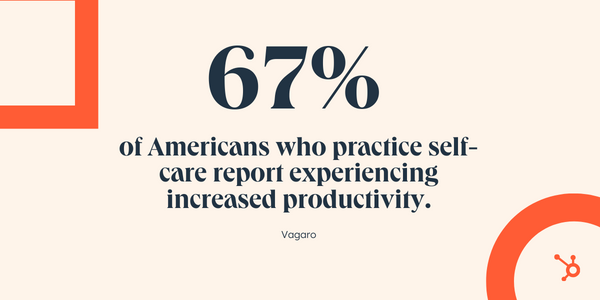
3. Try co-working.
Co-working is especially helpful if you‘re like me and work from home. I live in a small studio, where I’m always near my TV, phone, books, or dishes that need washing.
With everything around and no manager or co-worker in sight, it’s tempting to distract myself.
So, I‘ll sometimes FaceTime a close friend I know who works from home, and we’ll co-work together. We know we’ll hold each other accountable and call each other out if we allow ourselves to stray from our tasks.
I find I get a lot more done that way.
“I work in silence on Zoom with my best friend for an hour every week,” says Principal Marketing Manager Julia Gueron. “She’s across the country. It’s a great way to stay in touch with her, and I feel more focused if someone else who is just as busy is around working.”
Gueron says, “Sometimes we end up chatting, but it’s important to do this with someone who I know I can be honest with and say: ‘Hey – I really need to work now.’”
4. Know your style.
Some people can wake up feeling ready to take on the day, so they dive straight into their most tedious task first thing in the morning.
On the other hand, I am more of a night owl — so I tend to be more productive later in the day or early afternoon.
As a result, I warm up my work day by managing simpler responsibilities, such as responding to emails, checking Slack for any important messages, or scheduling future meetings.
Once the coffee and breakfast kick in and I‘m more alert, I’m ready to dive into writing the fantastic blog post you’re used to reading from me. Perfection takes time, after all.
That’s my work style; it helps me get things done while setting realistic goals.
“I’ve been working remotely for 11 years and have found that you have to lean into your remote work style,” says HubSpot’s principal recruiter, Steph McDonald. “For me, I get to my desk at 9 a.m. and rarely take time away until I leave at 5 p.m.”
McDonald notes that everyone’s work style is different, and others may clock in and take microbreaks or go to work out during the day to refresh their energy.
“It’s okay to have different styles as long as your work is getting done,” she says.
5. Set expectations with friends and family.
When I was a journalist, I was living with my family.
I‘ll never forget the many times I’d get a call from my parents during the workday complaining about dishes that needed to be washed or asking if I could pick up my mom’s favorite fruit on the way home.
Though they meant no harm, the constant calls and texts were distracting and affected my productivity. So, I had to talk with my parents about respecting my work hours and saving these conversations for after I clock out.
My colleague, Marketing Manager Tristen Taylor, experienced similar issues when she started working from home.
“A new challenge I experienced when I began working from home was trying to make my family understand that I was, in fact, working from home,” she recalls.
She says, “At the time, I was living in the city near my family and would experience unannounced visits from them wanting to go out to eat or run an errand, and would be met with a pout when I’d reiterate that I can’t just get up and go wherever.”
Like me, Taylor also suggests setting boundaries and expectations with your family, friends, and colleagues.
“You can’t afford to get distracted by those living in your home or dropping by, so let them know your schedule is more rigid than they assume,” she says.
Taylor adds, “On the other side of the coin, let your manager know you have rigid starting and stopping times to ensure you aren’t overworking or taking on too much work beyond your cadence or job description.”
So, ensure everyone in your professional and personal have a clear understanding and expectations regarding your schedule.
Even if they mean well, you don‘t want your friends coming between you and your work, and you don’t want your coworkers giving you more tasks than you can handle.
Maintaining a work-life balance can be challenging, but it’s worth it if it means managing your overall well-being while still being productive and a crucial asset to your team.

How to Make Your Brand Stand Out When Amazon’s Your Marketing Competitor

Last week, I was looking for a new yoga mat on Amazon. Being someone who plays it safe, I usually go for Amazon Basics. So, I found a lovely blue mat for about 20 dollars and added it to my cart.
Last week, I was looking for a new yoga mat on Amazon. Being someone who plays it safe, I usually go for Amazon Basics. So, I found a lovely blue mat for about 20 dollars and added it to my cart.
I almost entered my card details when I spotted a beautiful purple mat with a similar price and great reviews.
Despite all the awesomeness, I hesitated because the brand was unfamiliar.
But curiosity got the best of me, so I checked out the seller’s site. The offer and number of positive comments were too good to pass up. Finally, I decided to switch out the Amazon Basics mat for the purple mat.
All this made me wonder: Why do we always go for Amazon deals, leaving smaller brands behind? Is it just about prices or something else? Better ads, trust, safety?
To find out, I did some research and talked to brand experts. In this piece, I’m sharing all the tricks on how smaller brands can get noticed and beat the Amazon game.
Amazon’s Competitive Advantage
In January 2024, Amazon became the world’s fifth most valuable company, worth $1.599 trillion. And a massive part of that amount is thanks to Amazon Basics products.
Amazon Basics, started in 2009, is Amazon’s brand, offering a variety of everyday items at low prices.
When it first launched, Amazon Basics focused on selling small, cheap products they knew would make a lot of money.
Today, the offer is way bigger and better.
There are several factors behind this success:
Wide Range of Products
Amazon’s first significant advantage is its diverse offer.
Customers can get almost anything they want in one place.
New jacket? Check. New batteries? Check. Bath tissue? Check. Body lotion? Check.
Literally everything.
Interesting fact: Amazon wasn’t always this type of store. Initially, it was a small bookstore, and through years of hard work, it grew into a global retail giant thanks to dedication and the ability to adapt when needed.
Global Availability
Amazon’s smart logistics make deliveries quick and reliable no matter where you are. You can get your stuff in two days or even the same day.
They have warehouses worldwide, so even during busy times such as holidays, you can count on your package to be delivered at the right time.
Always thinking about the customer
Amazon wants you to have a great shopping experience.
They make returns easy, have customer service available 24/7, and regularly suggest other products you might like.
Amazon always had a soft spot for customers, and the letter from 1997 is the proof in the pudding:
“From the beginning, our focus has been on offering our customers compelling value. We realized that the Web was, and still is, the World Wide Wait. Therefore, we set out to offer customers something they simply could not get any other way,” writes Founder Jeff Bezos.
Innovations and Better Prices
With fast deliveries, rich offers, and smart technology like virtual assistant Alexa, Amazon stays ahead and gives its customers the coolest things to use.
And these cool items usually come with a price tag that’s way better than anywhere else.
Why?
Amazon uses cutting-edge tech and automation. This helps processes run smoothly and saves some serious money that way.
By lowering the prices of its products, it naturally attracts more customers because, let’s be real, who doesn’t love a good offer?
Amazon can give you more for less, and that’s their biggest advantage.
How Your Brand Can Stand Out (+ Data and Expert Tips)
Just like in SEO or social media, the crucial thing on Amazon is to stand out. Be different. Recognizable.
Before jumping to the practical guide, let’s see what John Aspinall, Amazon CTR coach and senior account executive at My Amazon Guy, says.
Aspinall notes that Amazon is a colossal presence, offering a wide range of products priced aggressively. They’re also backed by the behemoth’s reputation, which can feel like the endgame for competing brands, he notes.
“But there’s a chink in Amazon’s armor — complacency. Amazon often banks on its brand name, assuming its products will be the de facto choice for consumers. However, they tend to overlook critical aspects such as SEO, merchandising, and tactical marketing,” Aspinall says,
Aspinall states these are “areas where smaller brands, with the right guidance, can outshine them [Amazon].”
Now check five easy steps to outdo the Amazon competition.
1. Improve your product pages with A+ Content for a better appeal.
Make your product pages stand out by using A+ Content (also known as “Enhanced brand content”–> EBC).
This Amazon tool lets you add cool stuff like better pictures, videos, and charts to tell your brand’s story. It helps answer customer questions upfront and leads to more sales and traffic.

Here are some simple things to add for better sales:
- Use catchy headers and pictures.
- Make lists to show off your product features.
- Use charts to compare your product with others.
- Get creative with your pictures and words.
A+ features can keep customers returning, boosting your sales by up to 8%.
Brands with a store get approximately 31x more repeat purchases in just 60 days.
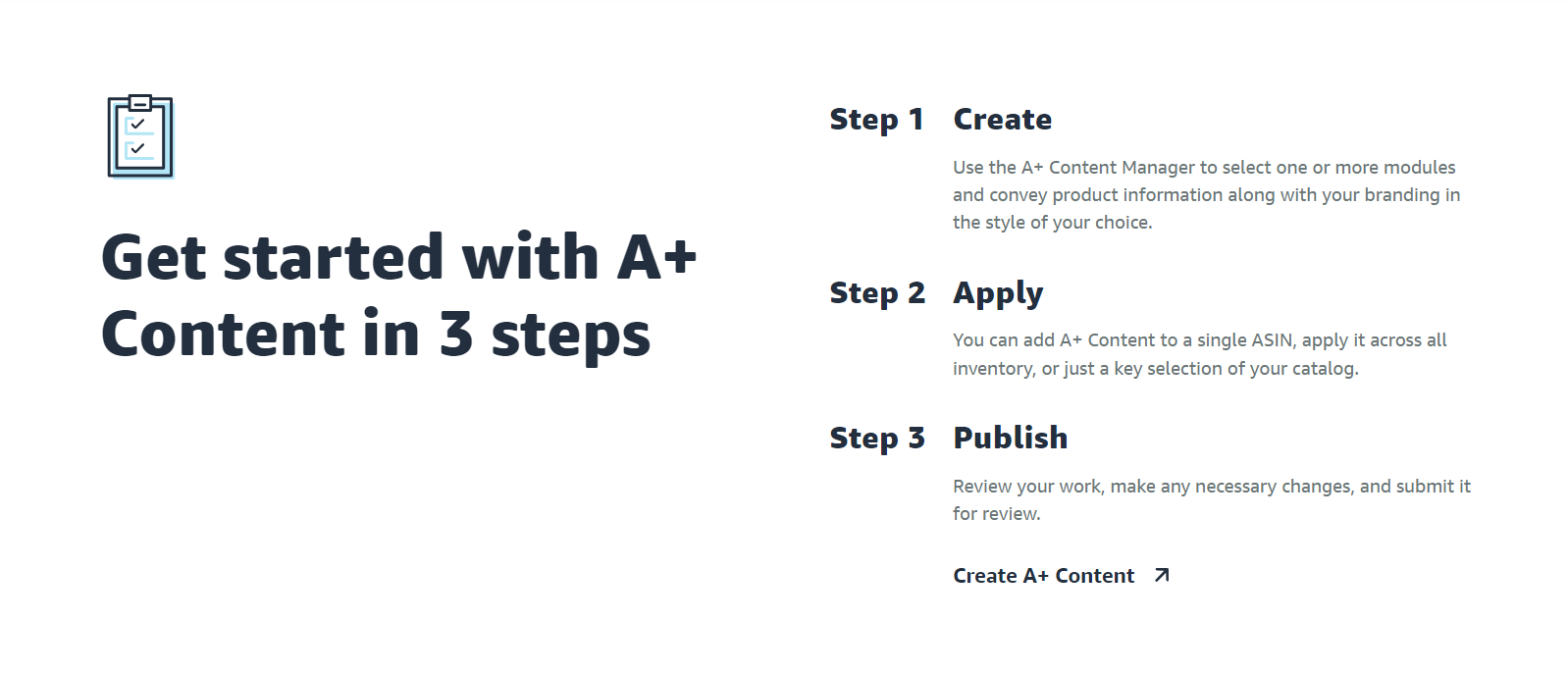
2. Launch ads and promotions to reach more leads.
After fixing up your store and improving your product pages, think about using Amazon Ads to get more people to know and buy from your brand.
Try different Amazon ad tools:
- Sponsored Brands. Stand out with a headline and logo in Amazon searches.
- Sponsored Products. Show your stuff on Amazon store pages and in searches.
- Sponsored Display. Reach customers on and off Amazon, featuring your brand’s products.
According to Amazon Advertising Benchmark Report 2022, Sponsored Products campaigns cost 13%-79% less per click compared to other options.
Also, keep an eye on how well your ads are doing by focusing on:
- Where your ads are and how well they’re doing.
- How many new customers have your ads brought in?
- How much do you spend on ads compared to your sales (ACOS)?
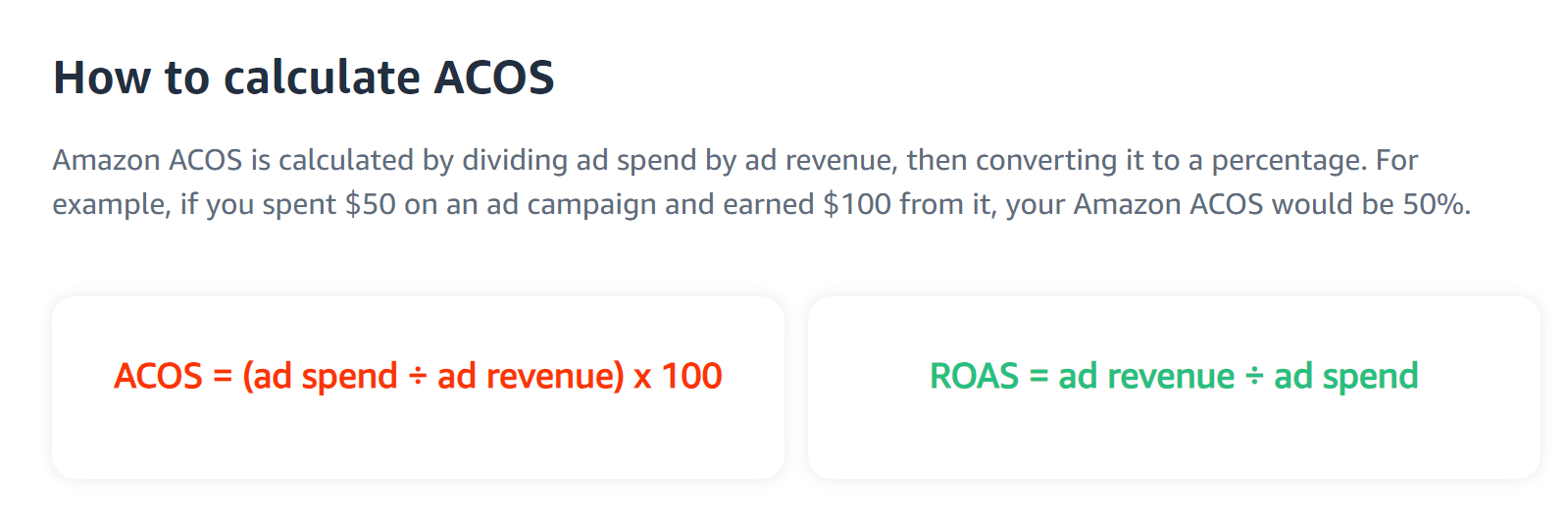
3. Tell your story to make people feel and love your unique brand.
As a brand owner, you have one significant advantage over Amazon products — a brand story.
“Amazon‘s approach is often ’one-size-fits-all,’ lacking a nuanced understanding of niche markets,” Aspinall says, “This is where smaller brands can capitalize. The key lies in differentiation and clear communication.”
Let’s take a look at Amazon Basics for a moment. While it offers a variety of products, it lacks a specific passion or focus. This makes its identity somewhat generic and less compelling.
Now, think about your brand.
You have a niche, something you’re passionate about, which changes the game. You can connect more deeply with your audience and position your brand as an authority.
“Then comes merchandising. Amazon’s in-house brands often lack the storytelling and brand personality that resonate with consumers,” John adds. “Here, other brands can create compelling product listings, high-quality images, and engaging descriptions that inform and connect with the buyer.”
He says, “It’s about creating an experience, not just a transaction.”
Make sure to tell your story your WHY on Amazon. Let people fall in love with you.
Then, they’ll fall in love with your brand.
And finally, your offer.
4. Encourage reviews naturally to build trust with your brand.
According to Testimonial Engine, about 72% of people won’t buy something until they’ve read reviews.
On Amazon, it’s crucial to keep reviews honest. No tricks allowed — fake reviews can lead to serious consequences. Avoid paying for or persuading positive reviews.
A simple note in your products asking for feedback is fine. Also, use social media to gently remind customers to leave reviews.
5. Make your unique voice heard and nurture customer loyalty with Amazon Live.
To grow a loyal customer base and make your brand more recognizable, use tools like Amazon Live. It’s a fun way to connect with customers in real-time and boost sales with live, shoppable content.
Based on Online Dasher research:
- Fans spend 43% more at the places they love.
- Businesses with loyal customers grow revenue 2.5 times faster.
- Loyalty program members generate 12-18% more yearly revenue growth than non-members.
So once you’ve got a fanbase on Amazon, the Manage Your Customer Engagement (MYCE) tool becomes your sidekick.
It lets you email your brand’s followers, including those who’ve recently shopped, shopped often, or spent a lot. Keep them hooked and excited about your brand.
“After making a sale, the focus should shift to keeping customers happy and encouraging them to recommend your brand,” says Kate Ross, a marketing specialist at Irresistible Me.
Ross notes that retaining customers is generally less expensive than acquiring new ones. Therefore, “this approach builds your brand’s reputation and credibility quickly,” Ross says.
Brands Going Toe-to-Toe with Amazon
The Amazon Basics brand is getting a lot of hype. But guess what? Some brands are still outshining them.
Whether it’s about quality, innovation, or unique features, these brands are making their mark on Amazon.
I’ll share three brands that give Amazon Basics a run for its money, each excelling in its way.
Let’s see.
1. Amazon Basics Yoga Mat vs. BalanceFrom Yoga Mat
To drive my point, let’s go back to the yoga mat.
My first choice was the Amazon Basics yoga mat.
Extra thick, comfy mat with elastic strap for storage and carrying. I like the 360-degree display, which lets you see the product from all angles.
On the other hand, Amazon Basics products usually have simple, or as the name implies — basic images. They’re pretty straightforward with a white background (even a bit boring if you ask me), but they get the job done.
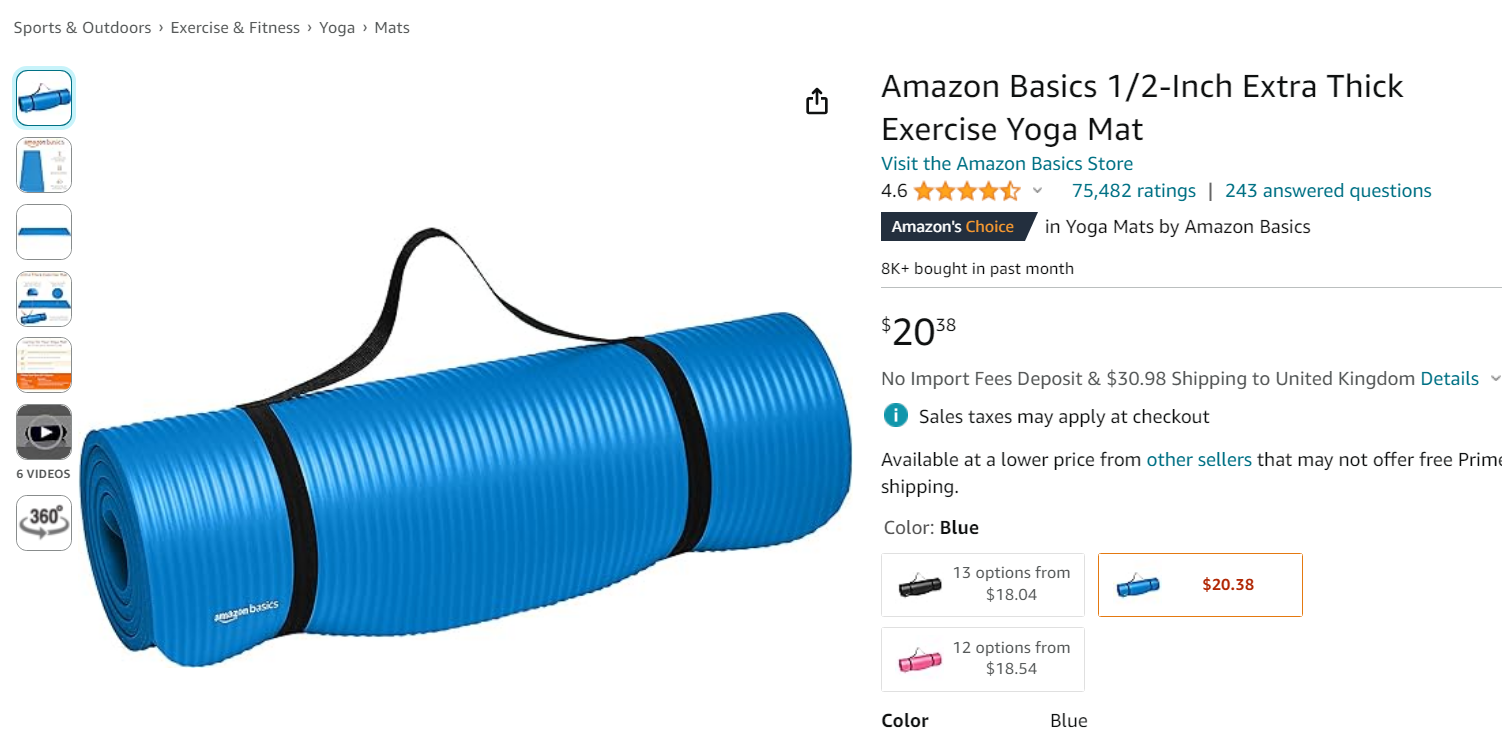
Amazon Basics Yoga Mat
- Price: $20.38
- Rating: 4.6 stars
- Number of purchases: 75,482
What I like: Clear product descriptions, a high rating, refund or replacement within 30 days, and an affordable price point.
Since I gave up on the Amazon Basics mat, let me show you the one I chose at the end: the BalanceFrom yoga mat.
I‘ll be honest; I’ve never heard of this brand before. Still, based on more than 91k ratings, it’s evident that many people have.
I loved the cool purple color and handy carrying strap, but what made me say “Yes,” was the A+ content below.
A neat section shows off the mats creatively, with pictures explaining all the features, sizes, and perks.
That’s something Amazon Basics doesn’t have.
Then, I checked out their gallery and found one awesome video.
The video shows how strong, solid, and waterproof the mat is. It was really well-made, showing the BalanceFrom team put the effort into producing quality content.
And that always wins me over — especially the logo and inspiring slogan ending.
They boldly declared themselves the top-selling exercise yoga mat in the U.S. for three years — a savvy move to boost trustworthiness.
They boldly declared themselves the top-selling exercise yoga mat in the US for three years — a savvy move to boost trustworthiness.
BalanceFrom Yoga mat
- Price: $19.99
- Rating: 4.5 stars
- Number of purchases/reviews: 91,084
What I like: Quality content, clear product description, refund or replacement within 30 days, more than 91k purchases, affordable price, high rating, impressive visuals, user-generated videos, and a powerful message in the ad video.
How BalanceFrom outshined Amazon Basics?
Cost advantage: BalanceFrom edges out Amazon Basics for being a bit cheaper. Not a huge gap, but a little savings is always a win.
More purchases/reviews: BalanceFrom garnered more reviews and purchases, indicating its popularity among customers.
Niche focus: Unlike Amazon Basics, which offers a wide range of products, BalanceFrom focuses specifically on fitness. This niche name helps it stand out, build trust, and attract the right audience.
Better content: BalanceFrom has more creative and detailed content.
Credible messaging: The strong message in BalanceFrom’s video adds credibility and trust in the fitness market. This confidence makes it a more reliable and attractive choice.
Note: This example is a solid reminder that snagging the top #1 spot on Amazon isn’t the only path to outperforming the competition.
This mat may not claim the first rank, but it effortlessly dethrones the Amazon Basics mat with 16k more reviews and purchases.
2. Amazon Basics Wireless Mouse vs. Tecknet Wireless Mouse
The next products I analyzed were two different wireless mice.
Let’s start with the Amazon Basics mouse.
It’s an ergonomic mouse available in five different colors.
The product promotion is average, in the classic style of all Amazon Basics products—nothing better, nothing worse. The description is short and clear, with simple pictures showing all parts from all sides.
But as I kept scrolling, I got a bit disappointed. Besides a couple of not-so-great user videos, there wasn’t much else worth checking out.
Amazon Basics Wireless Mouse
- Price: $10.39
- Rating: 4.4 stars
- Number of purchases/reviews: 20,714
What I like: The low price, positive overall ratings, and a good number of purchases.
Now, let’s check its biggest rival — the Tecknet wireless mouse.
Compared to the Amazon Basics mouse, this product looks better. The pictures are nicer, and the video is way better than Amazon Basics’ video.
Tecknet video looks professional and has cool pictures, animations, and good music in the background.
Beyond the classic features in the product description, one aspect caught my attention — the 36 months of support. What a great way to enhance the product’s value and show care for customers.
And below the product description, we can see more of Tecknet’s awesome content:

Or, for instance, this:
So fresh, so good.
Tecknet Wireless Mouse
- Price: $11.99
- Rating: 4.5 stars
- Number of purchases/reviews: 64,483
What I like: Stylish content, a product breakdown, slick images and videos, a customer-centric approach, fast delivery, free returns, and affordable prices.
How Tecknet outshined Amazon Basics?
Visual appeal: Better pictures and a pro-level video than Amazon Basics’ poor visuals.
Comprehensive product description: Detailed description with a full breakdown of features and benefits (36-month support).
Pricing and value: Although Tecknet is slightly pricier at $11.99, it justifies the cost with better content, a customer-centric approach, fast delivery, and free returns.
Customer ratings and reviews: Tecknet shines with a higher 4.5-star rating and a whopping 64,483 reviews, showing that many people love it and have good things to say.
3. Amazon Basics Wooden Kitchen vs. KidKraft Kitchen
Let’s playfully wrap up this comparison section and pit two wooden kids’ kitchens against each other.
The first one is the Amazon Basics Wooden corner kitchen.
When I went through the content on the page, I found details about the product, photos, and a video showcasing the kitchen’s features. However, I immediately noticed the lack of life in the content, especially in the video.
The video feels somewhat empty, lacking soul.
In my opinion, promoting a children’s product without featuring any kids is a huge marketing miss. 👎
Below, the manufacturer provides more details about materials, accessories, and benefits for children.
Amazon Basics kid’s kitchen
- Price: $169.37
- Rating: 4.2 stars
- Number of purchases/reviews: 1,697
What I like: Detailed product description, clear images, playset breakdown, and good ratings.
Now KidKraft.
KidKraft’s kitchen is so stunning.
And its content on Amazon is stunning as well.
First, the pictures show a little girl playing in the kitchen, adding the REAL touch I was talking about.
And the whole website below the product is simply fantastic.
First, there’s the section to learn more about the brand, and I absolutely adore their “Kids first. Play forever” slogan.
The images are super playful and colorful; it’s all so tied together with the brand and message. The brand tells its story through every photo, every word, and every piece of content.
One thing is for sure — the brand is dedicated to creating the absolute best for its littlest and sweetest audience.
KidKraft kitchen
- Price: $188.55
- Rating: 4.7 stars
- Number of purchases/reviews: 17,317
What I like: Genuine pictures, great content, catchy descriptions, vibrant colors, high ratings, and brand image.
How KidKraft outshined Amazon Basics
Kid-centric imagery: KidKraft uses real, lively images of kids, creating an emotional connection. Amazon Basics lacks this warmth.
Colorful allure: KidKraft’s vibrant palette automatically makes its products more appealing to kids, standing out against Amazon Basics’ dullness.
Storytelling descriptions: KidKraft’s descriptions tell a compelling story, engaging customers. Amazon Basics leans more on factual information, missing that personal touch.
Brand identity: KidKraft’s brand name is tightly linked to kids products, unlike Amazon Basics, which covers a wide range.
High ratings and many reviews: KidKraft’s products boast better ratings and more reviews, indicating customer satisfaction and building trust.
Beating Amazon and Making Sales
Brands compete hard on Amazon, not just with each other but with in-house giants like Amazon Basics.
Despite what people might think, success on Amazon isn’t only for the big shots. It’s for brands with clever plans and good strategies.
Let’s wrap up the main steps you should take:
- Improve product pages with A+ Content.
- Use Amazon Ads effectively.
- Share your brand story.
- Encourage honest reviews.
- Foster customer loyalty with Amazon Live and the MYCE tool.
And most importantly—be unique. You need to show why you’re special—whether it‘s quality, offer, ethics, or a different focus. It’s not about size but about being noticeably different.
Remember—in the Amazon world, victory goes to those ready to stand out and (out)shine.

Cancellation Email Examples I Love (For Your Inspiration)

The best-case scenario is that a cancellation email turns a churned subscriber into a retained customer.
The best-case scenario is that a cancellation email turns a churned subscriber into a retained customer.
But that’s not all the cancellation email can do.
Recently, I canceled a subscription. The truth was, I wasn’t entirely satisfied with the company, and someone else could do the same thing for the same money. I left.
Within hours, I received a very polite email from customer service, which made me feel valued. They offered a discount, and I felt they were very understanding. I admit it wasn’t enough to encourage me to sign up again, but it did allow the subscriber/software “relationship” to end well. The cancellation email was enough to curb my dissatisfaction, and now my narrative about the company is positive; I’d even recommend them to a friend!
While this cancellation email hadn’t quite wooed me back, it certainly left the door wide open for the future. It made me appreciate the power of a good email when the chips are down.
In this article, we’ll explore the components of well-done cancellation emails — plus share a template for you to create one of your own.
Table of Contents
The Best Cancellation Emails
I’ve dug through my emails and spoken to expert email marketers to find fifteen of the best cancellation emails. I’ve included why they’re effective, with the stats to prove it.
By learning from these cancellation email examples, you’ll be able to create your own version that will bring your customers back — or at least allow you to part ways in the best way possible.
1. Zero Bounce
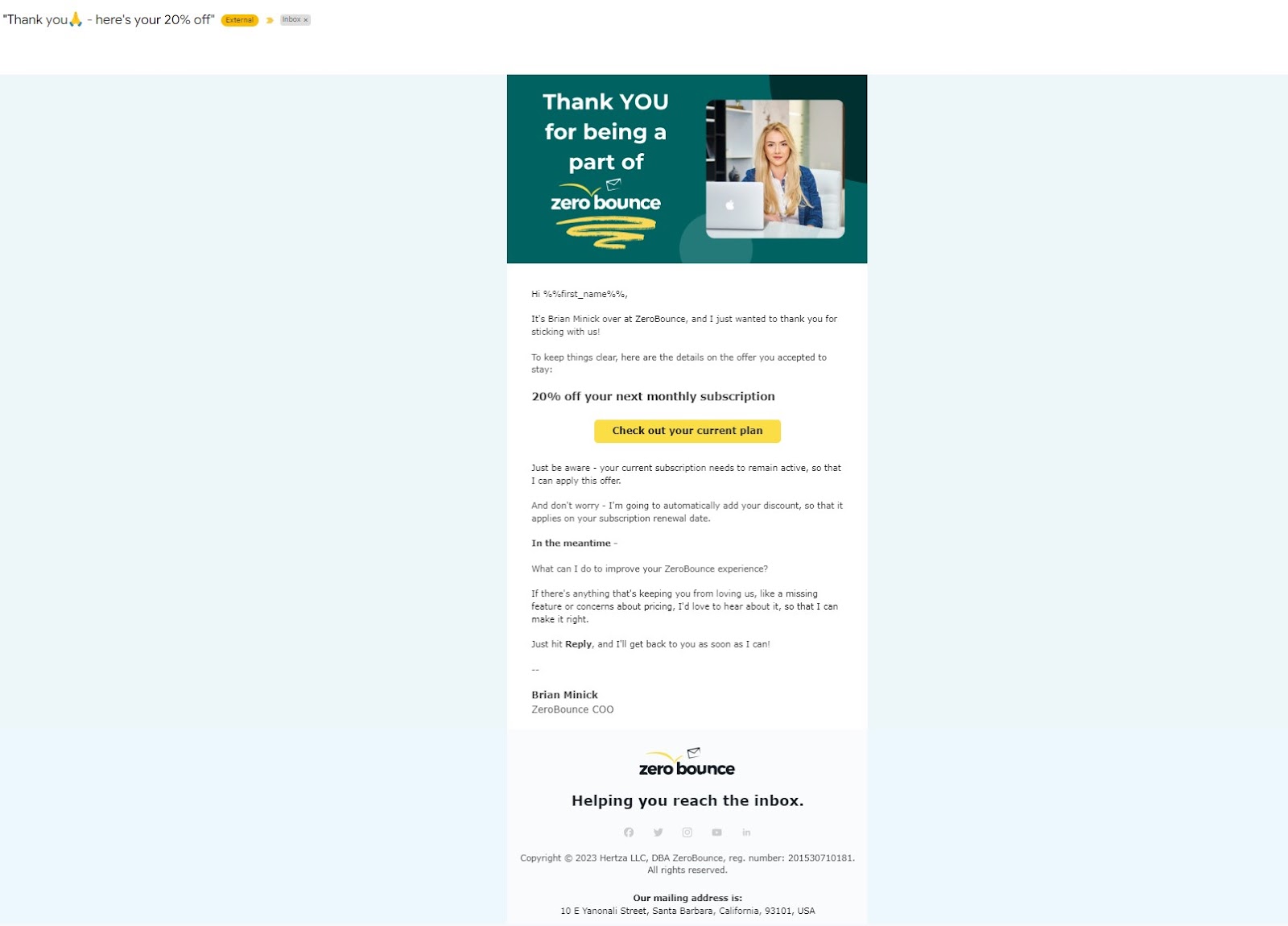
Zero Bounce has a staged process when it comes to cancellation emails. Zach Nonnemacher, Email Strategist at ZeroBounce, explains the flow.
- The person goes to cancel in the dashboard. A modal pops up asking for feedback and gives them a discount offer to stay.
- If they accept, ZeroBounce sends a confirmation email showing what they accepted.
- If they reject, ZeroBounce sends a follow-up based on that.
- Then, if they didn’t accept the first follow-up offer, ZeroBounce sends a second email later to those who rejected.
The emails have an open rate between 34% and 51%.
It’s worth noting that before Zero Bounce sends their first email, they’re gathering important information through a feedback pop-up. They also incentivize the user to return with a discount.
What I liked about it: I love how Zero Bounce has a flow of emails that considers where the user is based on how they responded to the first email. I also really like that Zero Bounce is asking for user feedback. This information offers insights explaining churn so they can work to reduce this in the future through marketing messaging or alterations to their offering.
2. Niceboard
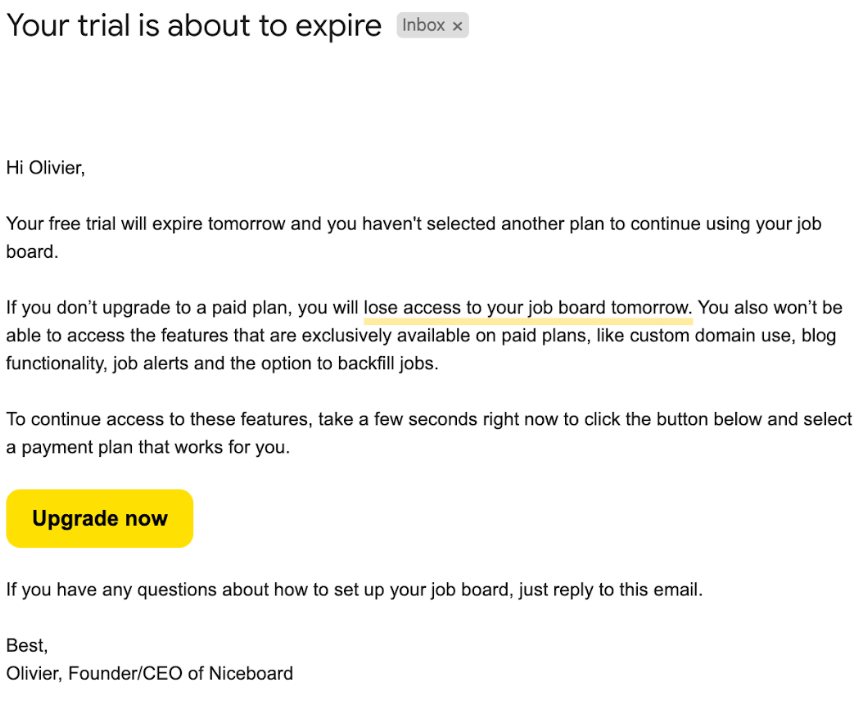
Like Zero Bounce, Niceboard has a cancellation email flow. Noticeboard sends two emails.
Hanna Feltges, Growth Marketer at Niceboard, explained the role of each email to me.
Email one (above) is sent to customers a day before their plan is canceled.
Feltges believes the elements that make this email successful for Niceboard include:
- Pointing out the features that users would lose access to when not upgrading. This helps recall why the user chose Niceboard in the first place.
- The timing of the email is one day before cancellation, giving the user a heads-up to take action.
- The framing of “continuing to have access to these features” makes the recipient take action and reduces friction.
- Offering a simple way to contact Niceboard (reply to the email).
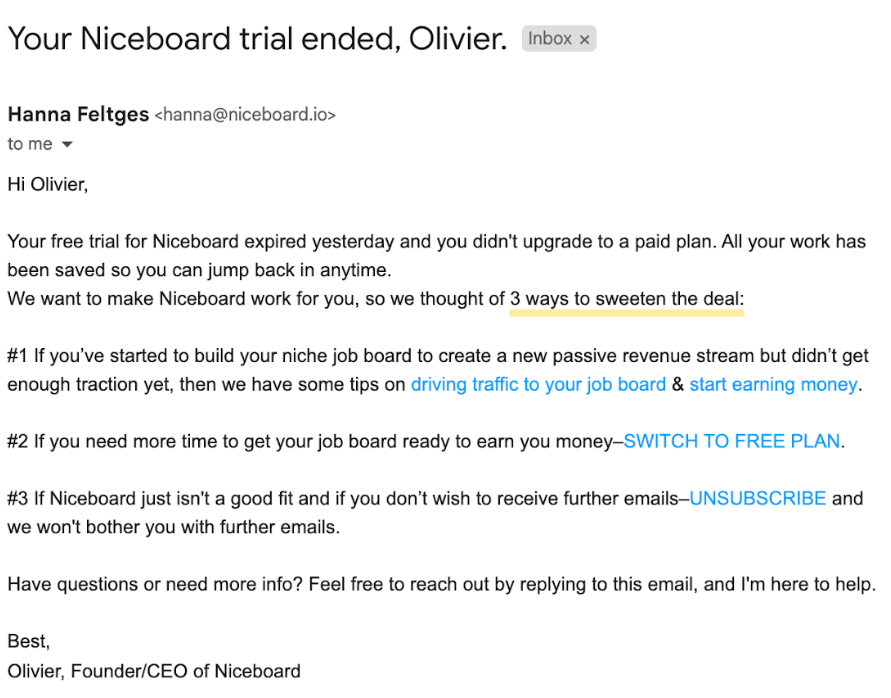
Email two is sent to customers the day their plan is canceled. Email two is effective because it
- Provides an easy way to get back to using the tool (“all your work has been saved”).
- Takes a proactive step to reduce friction for upgrading (“3 ways to sweeten the deal”): Tips on how to improve their experience and the ability to switch to a free plan.
- Offers an easy way to unsubscribe. While this might seem too easy, we consciously decided to suggest this to disqualify anyone not genuinely interested in our product.
What I liked about it: An email flow serves as a kind reminder to your canceling subscriber. We’re all busy, and the temptation of a “sweeter” deal might just be enough to bring someone back. I like the second email and how there are many options for the user to choose from. They can pick up tips, stay on as a free user, or unsubscribe.
As Feltges explained, the unsubscribe is very obvious in this email, but Niceboard is happy to lose disqualified email leads. I think this builds a bit of trust, too. I’d prefer a company that simply served me (even if I unsubscribe) rather than trap me in more emails.
3. RecurPost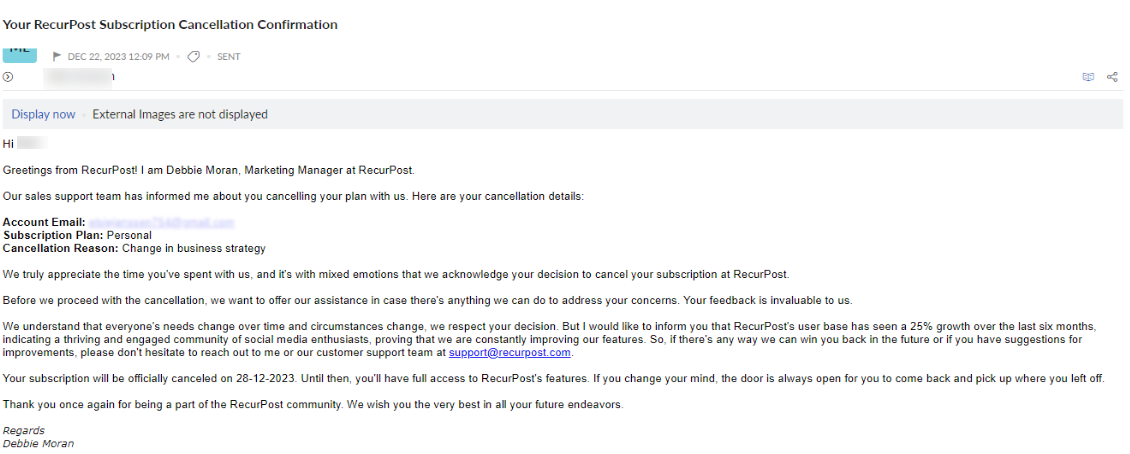
Debbie Moran, marketing manager at RecurPost, provided an example of their email cancellation.
Moran said, “I personally engage with customers canceling their subscriptions as a part of our customer retention strategy. Through this, I aim to understand their reasons, gather feedback, and explore solutions to address their concerns.”
Thanks to Moran’s personal email, she was able to turn this nearly-churned customer back into a subscriber. Moran said, “I realized that the customer’s issue was budget-related, not dissatisfaction with RecurPost. Through open communication and assistance from our sales support team, we customized a budget-friendly plan for her, making her a happy and retained customer.”
Moran believes there are five key reasons why the customer stayed:
- Customized budget-friendly plan.
- Open communication.
- Responsive customer support.
- Flexibility and adaptability.
- Positive customer experience.
Finally, Moran said, “Through these emails, my main goal is to turn cancellations into opportunities for improvement and continued customer satisfaction.”
What I liked about it: It’s cliche, but people do business with people. In this interaction, Moran was able to turn a churned subscriber into a retained subscriber. Looking at the email, the communication, responsive support, and everything else, it’s very clear to me how RecurPost kept their customer.
4. Linktree
This is the cancellation email I received just a few days ago, and it’s pretty effective. I signed up for Linktree because I wanted to give it a test for 30 days, free of charge. I’m notorious for forgetting to cancel subscriptions, so I chose to cancel this immediately to enjoy the 30 days without a potential unwanted bill.
I wanted to test the software and then make a decision about whether or not to stick with it and pay. For someone in this situation, this email is great. It reinforces the pro features, supports the tool with social proof in the form of reviews, and allows me to renew from the email easily.
What you don’t see in this email is the cancellation process. Before I even received an email, Linktree offered me 25% off; honestly, it was tempting.
What I like: This is a clean and well-designed email. I genuinely did read the reviews because although I have currently canceled my subscription, I am very much in the explorative phase with this new software. The renew button in the email gives me an easy place to return to if/when I am ready to commit.
5. Disney
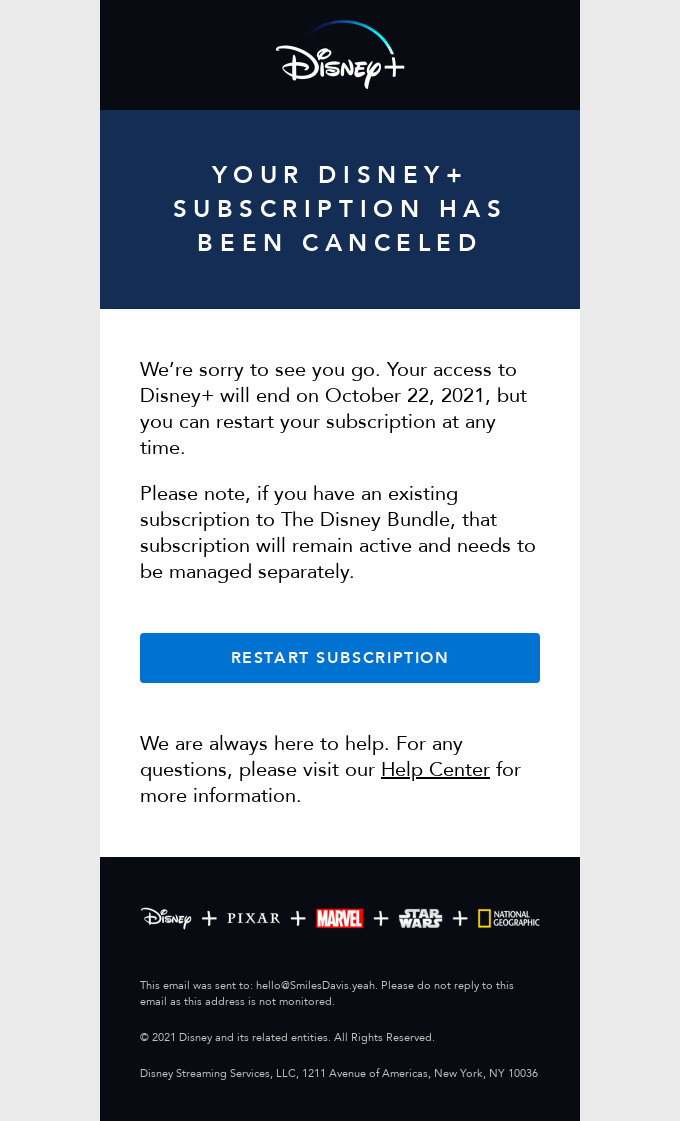
If you’ve canceled a Disney subscription, you’ll receive an email like the one above. It’s pretty to the point but does everything it needs to. Disney expresses its sadness to see you go, confirms the details (cancellation date), and serves as a reminder that you can restart anytime.
The email includes the “restart subscription” button to remove friction. Before canceling my Linktree subscription, I might’ve questioned why Disney and others added a “restart” CTA, but if someone’s subscription is coming to an end without their knowing, the frictionless renewal/restart would be much appreciated.
What I liked about it: I liked how Disney advised customers on what to do if they also had The Disney Bundle. I found this very transparent. Disney could easily allow unknown subscriptions to leave their customers’ banks, but they did the right thing.
Consumers appreciate actions such as this, but they also save customer service a lot of time with a) disgruntled customers and b) refund requests. A good move all around.
6. Twitch Turbo
Twitch Turbo removes ads so you can enjoy your viewing! Their cancellation email is very simple and to the point. They’re giving you all the information and not making any grand gestures, such as discounts or incentives to bring you back.
What I liked about it: This could be slightly contradictory to my previous comments, but I like its simplicity. I appreciate not being pulled back in with an offer. However, I would encourage cancellation emails to include an offer where possible.
7. Kmart
A cancellation of goods requires an email so the buyer knows their cancellation was successful.
This example from Kmart confirms the refund request has been noted. They’ve shared the items within the email so the recipient has a reference. In this case, the user triggered the cancellation, but for circumstances where it was not, Kmart offered the why behind the cancellation. They’ve also got quick access to chat or help, which is great customer service.
What I liked about it: One thing that stands out to me in this email is the confirmation of cancellation, followed by reassurance that the refund confirmation email is on its way. This email ensures that the recipient has more answers than questions and is in the know about what’s going on.
8. Booking.com
Cancellations on Booking.com are not always straightforward as booking.com is the third party between the buyer and the property.
Like Kmart (above), Booking.com has done a good job reassuring the recipient about what’s happening. This simple email includes an update: Booking.com is finding a solution regarding cancellation with the property.
Naturally, booking.com has protected itself and given the recipient all the information, including a reminder about the property terms.
What I liked about it: Although the matter is in hand and Booking.com is negotiating with the property, I like that they gave the recipient full control over everything by providing contact details.
9. Cathay Pacific
This cancellation email was sent during a busy time for Cathay Pacific. As you can see in the email, they’ve received a large increase in refund requests and have clarified to the customer that they’re doing everything they can. Plus, they are also managing expectations with a time period of seven to twenty business days.
Additionally, Cathay Pacific has already apologized for potential delays. Their customer service throughout this email is great.
What I liked about it: The email is polite and to the point, but Cathay Pacific has done everything it needs to appease and serve its customers.
10. Craft Gin Club
I joined and canceled a Craft Gin membership some time ago. This cancellation email followed, and I appreciated it.
A plain text email from Amy felt genuine. It was more like a communication with her than a standard cancellation email that everyone would receive. Though I know everyone would receive this, the email did not lose its charm.
The email offered all the common elements of a cancellation email: Amy tells me she’s sorry I’m leaving, leaves the door open for me to return, and tells me what I’m losing by canceling.
Finally, Amy asked if I could fill out the feedback form.
What I liked about it: The feedback form is in bold text. Craft Gin is interested in knowing the why behind people leaving. I highly recommend adding this to cancellation emails or within the cancellation journey. Sometimes, a cancellation is done with a heavy heart, and the user might appreciate a moment to tell you what’s up.
Plus, if you know why they canceled, you’ve got another chance to bring them back, or if not, you can improve things for the next person.
11. LastPass
This LastPass cancellation email is a great example of someone reluctantly canceling with a company and the importance of the feedback layer.
I ended a two-year partnership with LastPass days after my subscription was renewed.
LastPass graciously refunded the annual subscription cost and sent the email above. I found it incredibly effective. Instead of begging me back, LastPass acknowledged me as a customer, asked why I was leaving, and offered a 15% discount. The offer of a discount felt like a subtle attempt, which I appreciated.
I did give LastPass my time to explain why I was leaving, and they did offer some reassurances. I appreciated LastPass asking about the reason for my cancellation.
While I didn’t renew with LastPass, I do feel good about how I was treated as a customer, and who knows, maybe I’ll go back sometime.
What I liked about it: The politeness of the email alongside the delivery made it hard to leave LastPass. I was tempted back! Although I did not return this time, it turned me from a categoric “I’d never use LastPass again” to a “who knows, maybe I’ll go back in the future.”
12. Washington Post
LastPass and Craft Gin are not the only companies using a plain text email for their cancellation.
Washington Post’s plain text email persuaded Sandra Grauschopf, Marketing Manager at Kodeco, to remain a subscriber.
Grauschop said, “It’s not a fantastic email, but the offer was just right to make the value (to me) worth the money. It convinced me to continue as a subscriber.”
I can see why. The email comes across as sent directly from a person at the Washington Post. It’s polite and to the point. The Washington Post managed to prevent Grauschopf from churning by offering a discount more in line with her budget.
What I liked about it: Emails like this prove that even a plain text email is impactful if the wording or offer is good enough. For me, it deviates somewhat from the notion that people don’t read or have to be persuaded by over-engineered designs to stay interested. If you have something of substance, plain text can work.
13. Adobe
I canceled a subscription with the Adobe Acrobat team, and this is the email I received.
Like all good cancellation emails, Adobe has done the essentials and provided an option to reactivate the subscription. The email is simple and to the point, but it gets the job done.
What I liked about it: Adobe signed off with “Thank you for being a valued customer.” Even as a customer leaves a paid plan, the email sign-off is polite.
14. pdfFiller
Alpana Chand shared a cancellation email from PDF Filler. Chand said, “I appreciated the tone of this email; I did write to them thanking them and saying I will use the paid service whenever necessary.”
The cancellation email from PDF Filler was so well written that it triggered a reply from Chand, who was unsubscribing. This is greatly effective.
Although PDF Filler didn’t turn a churned subscriber into a retained one, they did weather the cancellation well. They ended up with a positive interaction instead of a negative.
What I liked about it: I agree with Chand; the email was polite and helpful. The tone is great. They’ve also included a timeline of when the payment should return to Chand’s account.
15. Audible
I canceled my Audible subscription and received the email above. The email is generally very useful, informing me I have access until July. There’s a little warning about credits expiring, which would encourage me to download anything I need before the deadline.
Like many emails listed, Audible includes the option to keep my membership.
What I liked about it: The email, in general, is great, but I especially like how easy it is to get in touch if there’s an issue. With this particular cancellation, there was some confusion, and I used the Contact Us option to resolve a last query before I subscribed for the year.
How to Write a Cancellation Email (+Template)
Now we’ve analyzed fifteen cancellation emails, let’s look at the winning formula and write a template.
What makes a winning cancellation email
It seems that the formula for making a cancellation email stand out is:
- Cancellation confirmation, including dates.
- Details about refunds, if applicable.
- A genuine “sorry to see you go”.
- Features you’ll miss out on.
- A warning you’ll lose data.
- Resubscribe/renew CTA.
As a bonus, you can add:
- A personal approach (name the sender).
- Reviews from happy customers.
- Quick links to contact.
- Feedback request.
Although many emails in this round-up don’t include these bonus items, I’d highly recommend using them. The true success stories have come from those asking for feedback and offering alternative solutions.
Cancellation email template
Hello, [Name],
We’re sorry to see you go.
Your cancellation request has been processed. From [date], you’ll be moved to the [plan]. This means you will lose access to [benefit], [benefit], [benefit].
With the [pro plan], you also get
- [Pro plan benefit].
- [Pro plan benefit].
- [Pro plan benefit].
You can resubscribe anytime. In the meantime, if you have questions, please don’t hesitate to reach out to me.
If you have time, please fill out this feedback form.
Kind regards,
[Your name]Say Goodbye the Right Way with a Cancellation Email
I have no doubt that the cancellation email is absolutely essential. Naturally, you need to give your customers some confirmation that the action they’ve taken – i.e., canceling – is in motion.
More than that, a cancellation email could be the difference between a soured customer and a peaceful end to a partnership. Better, your cancellation email could encourage your customer to go back into an alternative product or service, a win-win for all.

I Asked ChatGPT How to Apologize Professionally in an Email — Here’s What I Got

Apologizing is hard. Apologizing professionally for a mistake you made at work? Even more challenging.
Apologizing is hard. Apologizing professionally for a mistake you made at work? Even more challenging.
We’ve all had to write an apology email at some point in our careers — whether to a coworker for missing a deadline, to a manager for making an error in a report, or to a customer for delayed shipping.
Learning how to apologize professionally for different scenarios is a skill that everyone should hone.
The hardest part about writing a difficult email is getting started. To help with this, I asked ChatGPT to write a professional apology email for me. I also created my own apology email template to compare.
We’ll take a look at these examples and the elements that go into crafting a sincere and professional apology email.
How to Apologize for a Mistake Professionally
How to Apologize for a Mistake Professionally
Apologizing professionally in an email starts with taking responsibility and ends with outlining a plan of action to remedy the situation.
Whether you’re apologizing to a coworker or writing an apology letter to your customers, follow these steps to ensure your apology is professional and effective.
1. Acknowledge the mistake.
The first step is to address the error and say you’re sorry. Don’t beat around the bush — let the recipient know right away that you’re writing to apologize for your mistake.
Taking responsibility for your role in the situation, whether you’re speaking as an individual or on behalf of a company, shows that you’re accountable and aren’t going to make excuses.
Accountability is closely tied with trust when it comes to building relationships, so lead your email by owning up to your mistake before diving into an explanation.
2. Provide an explanation.
The recipient of your apology email deserves an explanation of why or how an error was made. This step is especially critical when you’re talking to a customer who doesn’t know the inner workings of your business.
Explain what went wrong, but be sure not to make excuses or blame others. Instead, briefly describe what happened and reiterate your responsibility in the scenario.
The recipient doesn’t need to hear a drawn-out story about how the mistake occurred. In my experience, the longer and more detailed your explanation is, the more it sounds like an excuse.
3. Personalize your apology.
An apology email doesn’t have to be stiff. We’re all human, after all. You can remain professional while still letting the person on the other side of the screen know that you’re genuinely sorry for the inconvenience you’ve caused them.
Personalize your apology email by being empathetic and addressing the recipient’s pain points. Empathy is one of the most important soft skills to hone in the workplace, and an apology email is the perfect time to communicate this.
4. Provide a plan of action.
After “How did this happen?” the next question the recipient has is usually, “What are you going to do to fix this?”
Reassure them that you have a plan by outlining clear next steps. Tell them what you’re going to do in the short term (i.e., “get this report to you by EOD today”) and how you plan on avoiding making the same mistake in the future.
Sharing your next steps helps to regain their trust, improve their outlook on you or your brand, and show them that you’re responsible for handling the consequences of your actions.
What ChatGPT Wrote for Me
Everyone has to write an apology email at some point. I was curious to see if ChatGPT could help in this process by writing some emails for me, so I fed it different prompts. The results are below.
1. General Apology Email
I started by asking ChatGPT to write a generic apology email for me. I wanted to gauge how well the chatbot understands these types of email scenarios.
Here’s the first apology email ChatGPT generated:

This response from ChatGPT follows the standard apology email structure. It covers all of the bases — starting with an apology, explaining what happened, and wrapping up by outlining the next steps.
However, it’s verbose. “I am writing to offer my sincere apologies” isn’t as straightforward as saying “I apologize.”
It’s better to lead with a strong and sincere statement instead of using too many filler words that ultimately weaken your message.
What I like: I like that the email signature includes your name, position, and contact information.
If this email were being sent to a colleague you haven’t interacted with before or if it was a personal apology email to a customer, this would be helpful information they’d need to have.
2. Apology Email: Missing a Deadline
For my next prompt, I asked ChatGPT to write an apology email for a more specific scenario. I also asked the chatbot to make it shorter:

Here’s the apology email it generated:

While ChatGPT followed my request for a shorter email, in my opinion, some of the copy is still unnecessary. If I were writing this email, I’d get to the point sooner. An apology email doesn’t need to include fluff.
All that does is force the recipient to skim the email to look for the information they need (like what your plan of action is).
I also think this email could use a bit of personalization, but that’s to be expected when you’re using AI. At the very least, this email provides a framework that can be edited to fit your voice and tone as needed.
What I like: Like the last apology email, this one follows an appropriate framework for an apology email. It starts with an apology and a brief explanation of the error, followed by accountability and next steps.
3. Apology Email to Boss
I want to see if the tone or structure changed if I asked it to write an apology email to my boss.
Here’s the next prompt I created:

This time, I included a request about the tone. After seeing the last two AI-generated emails, I can see that ChatGPT uses the same tone and style if it doesn’t have any direction.
Here’s the email ChatGPT came up with:

As far as tone and length, this response is much better. The apology is succinct and to the point while still demonstrating ownership and accountability for the error. The only thing I’d add is a sentence with a little more empathy.
Addressing that you understand how an error affected the recipient shows that you’re considering their feelings, too.
What I like: I like this line: “I take full responsibility for the oversight, and I understand the importance of accuracy in our work.” To me, this emphasizes that the person understands the ramifications of the error and is taking accountability.
4. Apology Email to Customer
For my next prompt, I wanted to see if ChatGPT could make the apology email more personal. I also created a different scenario for this apology email:

When writing an apology letter to customers, your message should focus on taking accountability for the mistake. It should also acknowledge the customer’s pain points and potential frustrations with the situation.
I think this AI-generated email does both of those things well. I also appreciate that it ended the email with the customer support team’s contact information to assure the customer that they’re there to help.
What I like: I like that the email creates an opportunity to offer the customer a discount to make up for the mistake. This can be a good way to regain loyalty from a customer who may have had a not-so-great experience with your company.
5. Apology Email to a Large Group
Another scenario where you may need to write an apology email is when there’s an issue that affects a large group of people.
For example, if your software company experiences a mass outage and none of your customers can use the product for a certain period.
I used this scenario for my next prompt:

Here’s what the chatbot came up with:

In this scenario, customers will expect a thorough explanation, which I think this email does well. While this email follows best practices for writing a professional apology email, it’s too long, in my opinion.
Here’s how I’d rewrite this one:
Dear valued customers,
We sincerely apologize for the recent service outage.
For approximately five hours, our systems experienced unexpected technical issues that resulted in downtime for all of our customers.
We understand the significant impact this outage had on your operations, and we deeply regret any inconvenience or frustration it may have caused.
We have implemented additional measures to prevent similar incidents from occurring in the future.
As a gesture of our apology and appreciation for your patience during this challenging time, we would like to offer [mention any compensation or gesture, if applicable].
We sincerely apologize for any inconvenience or disruption this outage may have caused to your business. If you have any questions or need further assistance, please reach out to our customer support team at [Customer Support Email/Phone Number].
Thank you for your understanding and continued partnership. We value your business and remain dedicated to providing you with the highest level of service and support.
How to Write an Apology Email (Using My Template)
Now that we’ve seen what type of apology emails ChatGPT can generate, let’s see if I can write something better.
Here’s an apology email I put together based on a common workplace scenario: missing a deadline.
Hi [First Name],
I apologize for missing the deadline for [project name] — this was an error on my part, and I take full responsibility.
I understand the impact this has on your team’s timeline. I plan to make up for that by getting this to you by EOD tomorrow.
Please let me know if this new deadline fits within your timeline. If there’s anything else I can do to support the project in the meantime, don’t hesitate to reach out.
Again, I’m sorry for the delay!
Thank you,
[Your Name]
Let’s break down the elements I used in this apology email so you can emulate it in your next apology email.
Take ownership.
While you don’t need to grovel, you should take full responsibility for your actions. Don’t point fingers or come up with excuses.
The first thing I wrote in my email was, “I apologize.” I followed that up by saying, “…this was an error on my part, and I take full responsibility.” Writing this lets the recipient know that I’m owning up to my error and I’m not blaming anyone else.
I also ended my email with another quick apology because it doesn’t hurt to express it one more time. However, two times is probably enough for this scenario — any more than that could come across as groveling.
Lead with empathy.
Yes, you should provide a quick explanation so the recipient isn’t left in the dark, but you don’t need to go into detail about the reason you missed a deadline. Ultimately, an error was made, and you can’t change that fact.
Instead, approach the apology email with empathy for the recipient. I did this by saying, “I understand the impact this has on your team’s timeline.”
This lets the recipient know that you’re being accountable for the consequences of your actions. If you want to rebuild trust, whether with your coworker or a customer, accountability is essential.
Communicate next steps.
After you apologize and take accountability, let them know what your next steps are. How are you going to rectify the situation? In this scenario, I reassure the recipient that I’m handling the mistake by providing an amended deadline.
By letting them know that I will get the project to them “by EOD tomorrow,” I’m communicating that I have a plan to make the situation right. This also shows that I’m taking ownership of the mistakes rather than putting the next steps on them.
Saying Sorry the Right Way
There were a few differences between the apology emails ChatGPT generated and the one I wrote. For starters, my apology email was more straightforward. I started my sincere apology right out of the gate and led with empathy.
I also outlined a clear and specific action plan, so the recipient knew what to expect next.
While ChatGPT followed a similar structure, it usually added a lot of unnecessary filler words. In my experience, this weakens the overall message.
If you need to write an apology email to a large audience like your customers or email marketing list, then using ChatGPT can help you figure out what to say faster.
An AI-written apology email can save you time, but it would need to be edited to align with your company’s voice and tone.
If you need to write a quick yet professional apology to a coworker or client, then I suggest using my template or writing your own email to make it more personable.
